
Identifying and Permanently Repairing Damage to Traffic Areas
Depending on their construction, traffic surfaces are subjected to varying levels of stress. Asphalt surfaces, in particular, are sensitive to mechanical stress and weather conditions. Damage such as cracks, spalling, or sunken areas requires targeted measures to ensure long-term serviceability.
Stresses and causes of damage to traffic surfaces:
- High traffic loads and increasing traffic volume
- Shear and braking forces, particularly at intersections and junctions
- Point loads caused by heavy traffic
- Temperature fluctuations and thermal stresses
- Moisture and freeze-thaw cycles
- Aging and material fatigue of asphalt surfaces
- Local weak spots such as transitions, junctions, or structural elements
Depending on the nature and extent of the damage, various measures are employed—ranging from routine maintenance to targeted repairs.
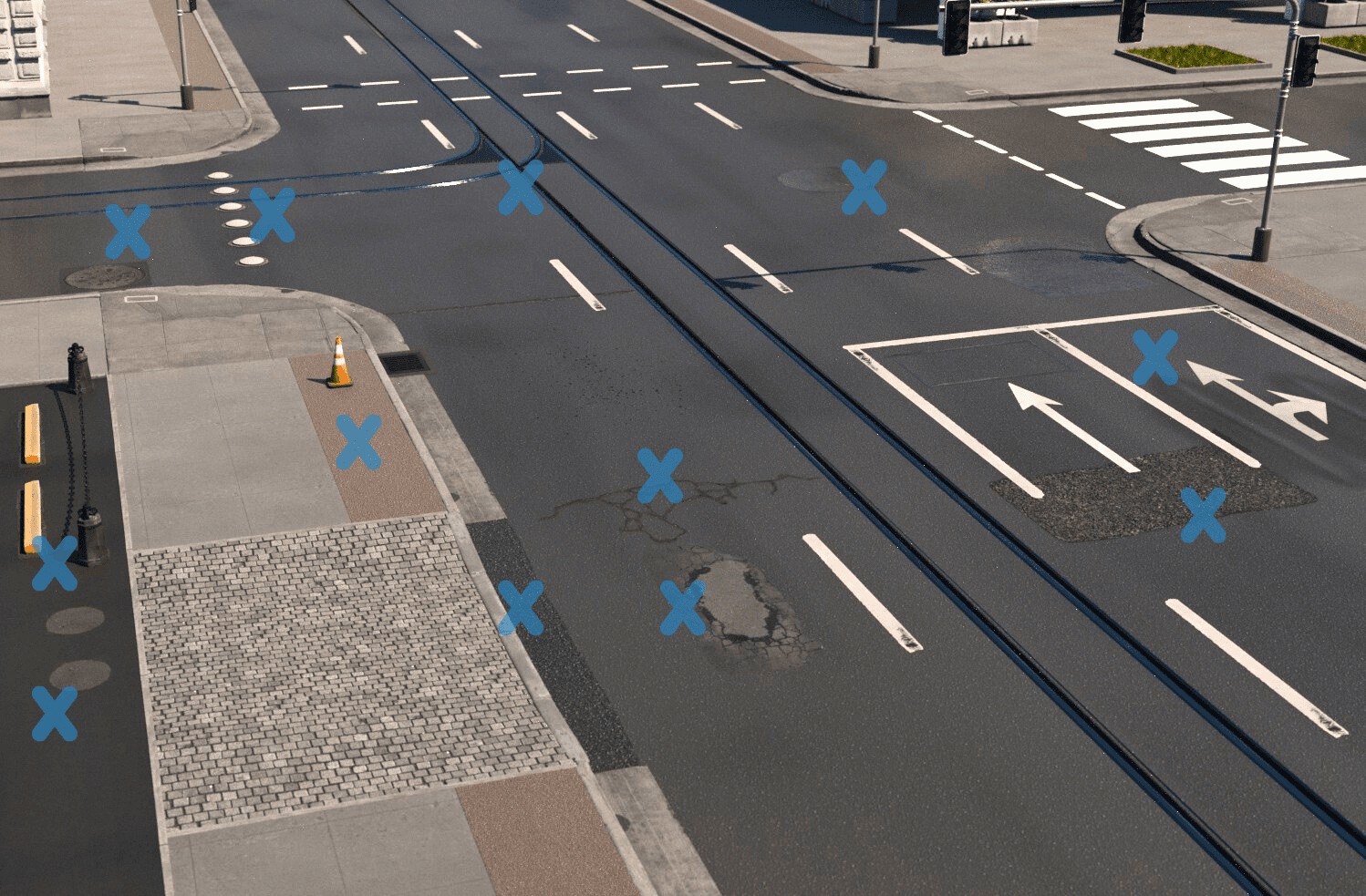
For the quick and durable repair of traffic surfaces
Repair of Traffic Areas Using Triflex Systems
- Flexible
Adaptable to different surfaces, details, and connections—even in cases of complex damage.
- Year-round
Can be applied even at temperatures above 0 °C. For maximum predictability and minimal downtime.
Repair Solutions for Municipalities and Road Construction
Traffic surfaces in public spaces must be maintained in a way that ensures long-term safety, cost-effectiveness, and compliance with regulations. Fast and durable solutions are particularly needed for heavily trafficked asphalt surfaces. Triflex systems enable targeted repairs with short closure periods and high durability.
Benefits for municipalities and public contractors:
- Minimized road closures in inner-city traffic
- Permanent elimination of typical damage patterns
- Regulation-compliant implementation using tested and proven systems
- Predictable measures and reduced lifecycle costs
Benefits for contractors and installers:
- Easy application without complex machinery
- No rolling or compaction required
- Can be applied at temperatures above 0 °C
- Quick reopening to traffic and short construction times
Suitable for typical applications such as intersections, junctions, and damaged sections.
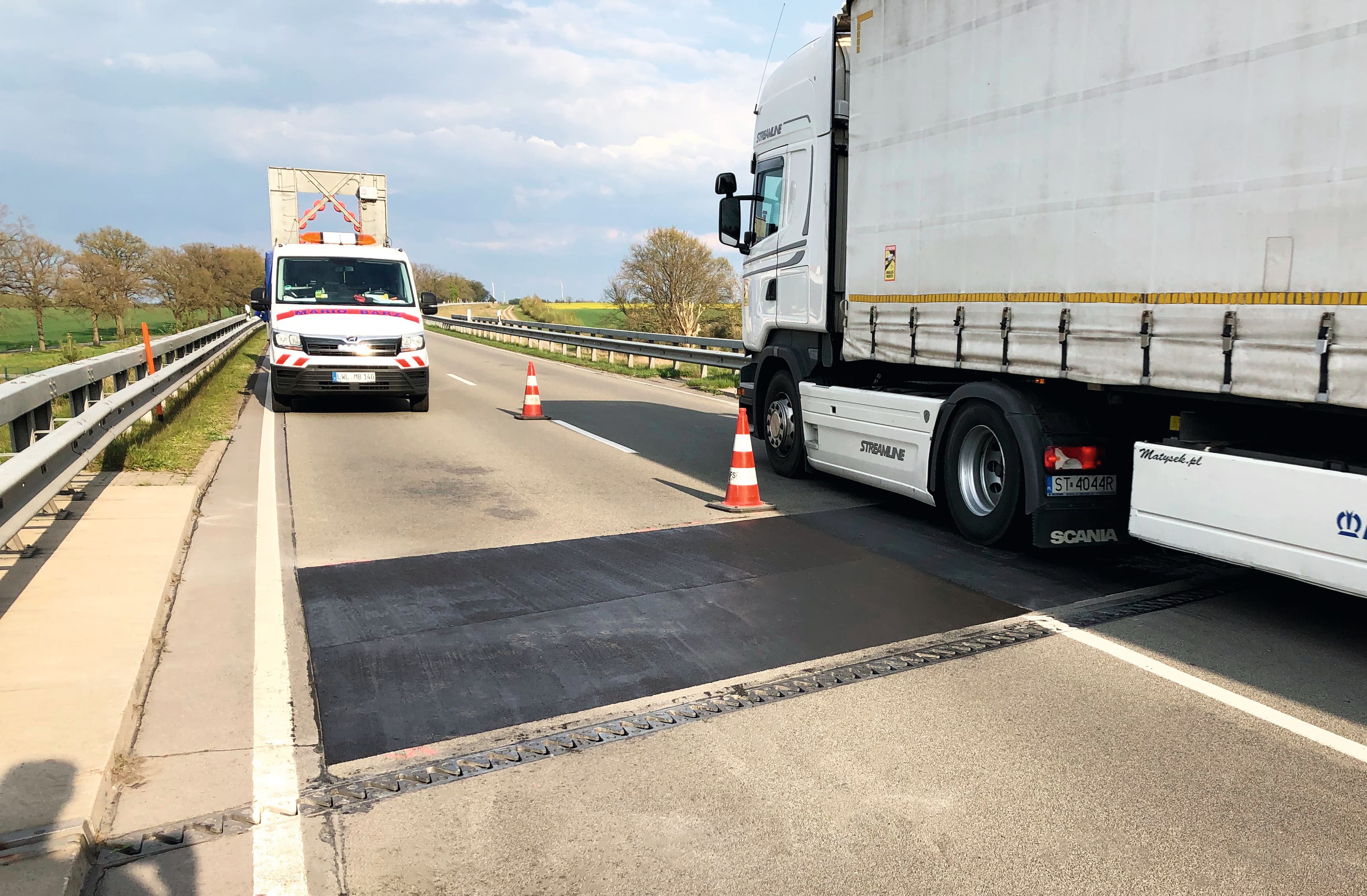
Combined Repair and Marking of Traffic Areas
Traffic areas are often re-marked or adjusted as part of repair work. Triflex offers coordinated systems that combine repair and marking in a technically sound manner and enable them to be implemented as part of a seamless workflow.
The systems are characterized by:
- High retroreflectivity even when wet
- Marking systems tested in accordance with applicable regulations (e.g., BASt)
- Short drying times
- Durable adhesion to asphalt and concrete
Repair and marking are technically coordinated and can be efficiently implemented as part of a seamless workflow.
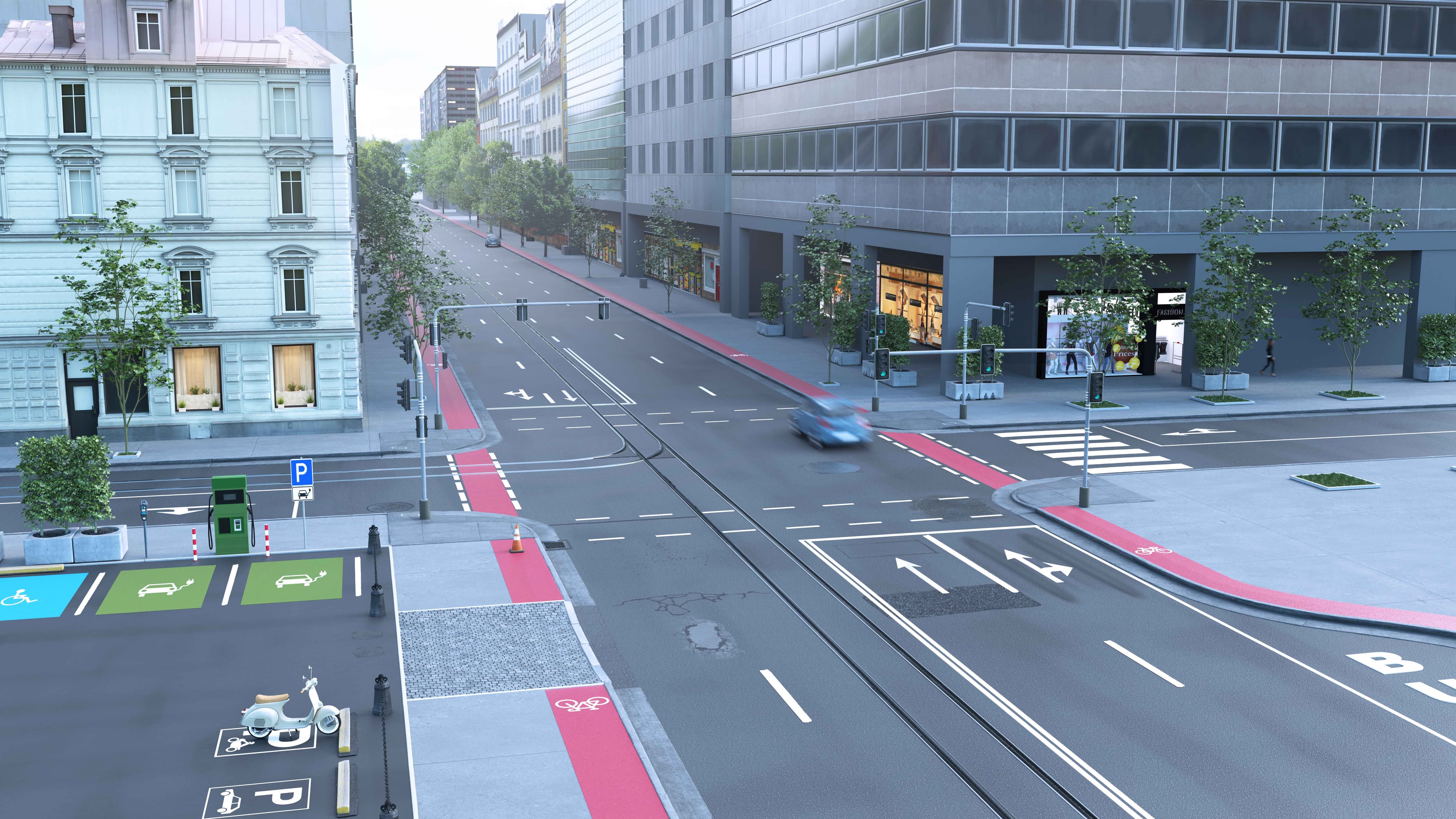
Typical Applications of Traffic Area Repairs
Depending on the nature of the damage and the structural conditions, different repair and design solutions are used. The following application areas illustrate typical practical uses.
Our specialists will be happy to advise you on our products.
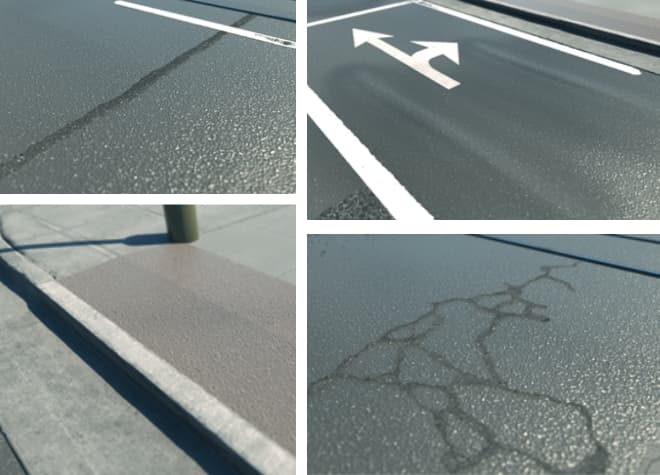
Traffic areas
Permanent repair of localized damage to asphalt and concrete surfaces.
- Reprofiling potholes
- Leveling manholes
- Leveling depressions
- Filling cracks and hairline cracks in asphalt
- Construction joints
- Repairing isolated areas of damage
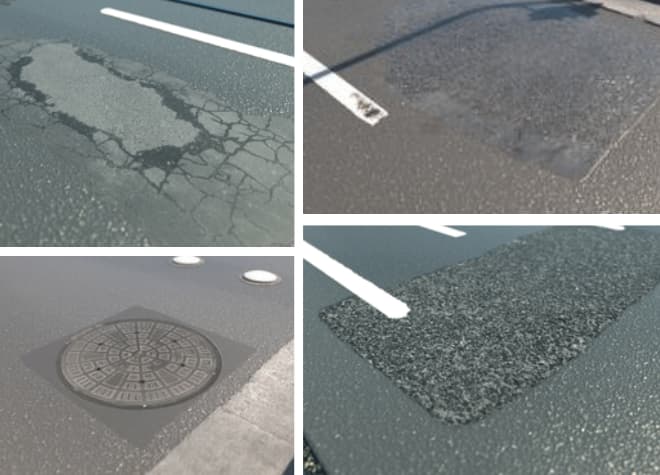
Traffic areas
Leveling and restoring damaged traffic surfaces to ensure a permanently level and safe surface.
- Leveling manholes to the same height
- Potholes and cracks
- Seam covers
- Ruts and track marks
- Local deformations
- Railway and track areas within the road right-of-way
- Aggregate loss
- Grades
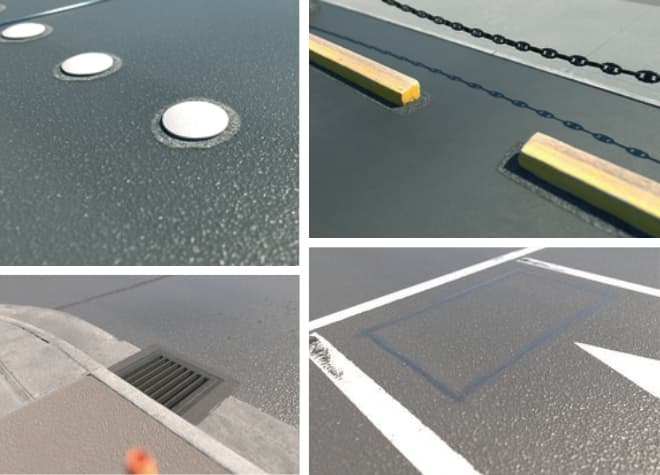
Traffic areas
Reliable integration of embedded components for safe traffic areas in public spaces.
- Curbs and edging stones
- Induction loops
- Road reflectors
- Manhole covers
- Surface traction
- Bridge details
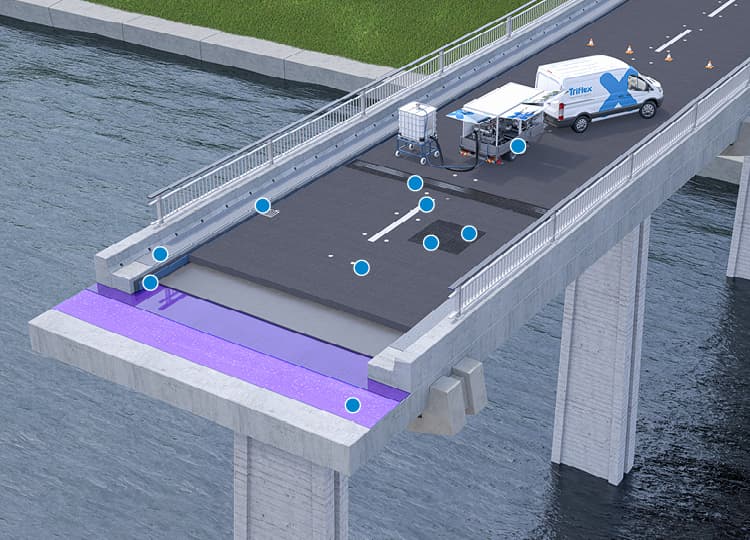
Repair and Waterproofing of Bridge Structures
Bridge decks are subjected to high stresses from traffic, moisture, and de-icing salts. Triflex offers PMMA-based waterproofing and sealing systems for new construction and repair projects that can be installed in compliance with ZTV-ING 6-1 regulations and enable short construction times.
Your benefits at a glance
• Short closure periods
800 m² of pre-applied waterproofing or 2,400 m² of machine-sprayed waterproofing per day
• Planning reliability
Application possible even at temperatures as low as 0 °C.
• Systems compliant with regulations
Certified solutions in accordance with TL-TP BEL-EP for reliable planning and bidding.
• Long-lasting protection of the building structure
Detailed waterproofing solutions based on standard drawings.
FAQ – Frequently Asked Questions About the Repair of Traffic Areas
Repair is economically viable when the damage is localized and the load-bearing capacity of the traffic surface remains intact. Typical examples include cracks, spalling, or damaged areas in heavily trafficked zones such as intersections or junctions.
A complete resurfacing is generally only necessary when there is extensive structural damage or deep deformation. The goal of repair is to specifically extend the service life of the pavement and keep investment costs predictable.
Typical areas of damage include potholes, cracks, spalling, ruts, or damaged sections around fixtures such as manholes and curbs.
Repair efforts reach their limits when the pavement structure no longer has sufficient load-bearing capacity or when there is extensive structural damage. In such cases, a complete reconstruction is necessary.
The durability of repairs depends largely on the nature of the damage and whether the work is performed properly. PMMA-based systems offer high resistance to traffic loads, weather conditions, and temperature fluctuations.
They enable a permanent bond with the existing structure and help to specifically extend the service life of traffic areas. The key factors here are the correct assessment of the cause of the damage and implementation in accordance with the system specifications.
PMMA systems react very quickly and reach their full load-bearing capacity within a short time. In many applications, repaired areas are ready for use again after about 45 minutes.
This makes it possible to carry out work within short time windows, such as at night or in sections while traffic continues to flow. Especially in urban areas, this is a decisive advantage over traditional construction methods.
Common applications include high-traffic areas such as intersections, junctions, bus lanes, roundabouts, and logistics areas.
Repairs are particularly cost-effective in areas where localized damage must be quickly repaired without causing long-term disruption to traffic.
In many cases, repairs can be carried out in sections and with flexible scheduling. Thanks to the systems’ rapid response, measures can be tailored to traffic volume and available time windows.
Work can often be carried out at night or while traffic is flowing. This minimizes road closures and allows construction processes to be efficiently integrated into existing traffic patterns.
PMMA-based repair systems can generally be applied starting at around 0 °C . This allows repairs to be carried out reliably even during the fall and winter months.
Traditional renovation methods often require significantly higher temperatures and can only be used to a limited extent—or not at all—during the cold season. With PMMA systems, repairs can therefore be carried out nearly year-round, which increases planning reliability and reduces renovation backlogs.
Yes, repair and marking can be technically coordinated and implemented as part of a seamless construction process.
This reduces coordination points, minimizes the effort required for coordination, and shortens the construction time. This is a key factor in improving efficiency, especially for projects carried out while traffic is flowing.
The systems meet the relevant technical requirements for use in traffic infrastructure construction and can be planned and put out to bid in accordance with regulations.
For road markings, there are additional requirements regarding visibility, skid resistance, and durability. Triflex marking systems are BASt-certified and therefore suitable for use in public traffic areas.
This provides planners and clients with a reliable basis for tendering, construction, and long-term use.
PMMA-based repair systems differ from conventional methods primarily in their fast curing time, high adhesion, and flexible application.
While conventional asphalt repairs often require extensive construction work, compaction, and longer road closures, PMMA systems enable quick, localized repairs without the need for complex equipment.
In addition, they can be applied even at lower temperatures, thereby significantly extending the window of opportunity for repairs.