Safety and Sustainability in Stadium Operations
Requirements for Stadium Sites
Stadiums and event venues are high-traffic structures with complex components and stringent safety requirements. Dynamic loads, weather conditions, and temperature fluctuations place constant stress on waterproofing and surfaces.
In addition to grandstands and concourses, the overall system also includes entrance areas, stairways, roof surfaces, parking lots, and access roads. Critical areas include detail connections, joints, and transitions.
The solution must be permanently watertight, mechanically durable, and slip-resistant, and capable of being integrated within the tight construction windows between events.

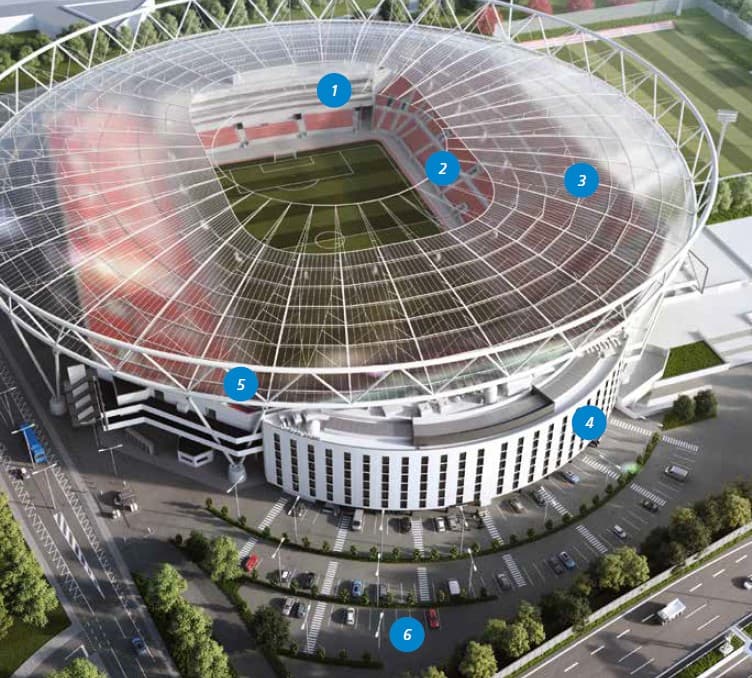
Applications in the Stadium Area
Triflex systems cover all relevant functional areas of a stadium complex—from roof surfaces to spectator areas to parking and traffic areas.
1. Locker rooms and functional areas
Waterproofing and coating of technical rooms, media areas, and interior spaces with long-term moisture protection.
2. Grandstands and spectator areas
Crack-bridging waterproofing systems and slip-resistant surfaces for high-traffic spectator areas.
3. Roof Areas
Waterproofing of complex roof structures made of concrete, steel, or polycarbonate using geotextile-reinforced liquid-applied systems.
4. Technical and media rooms
Detailed waterproofing of penetrations, connections, and transitions with high adhesion to various substrates.
5. VIP and box areas
Visually high-quality coatings with long-lasting functionality.
6. Parking and Traffic Areas
Heavy-duty waterproofing and coating systems under mastic asphalt, as well as markings for parking spaces, pathways, and safety zones.
System Benefits for Stadiums and Event Venues
Triflex systems provide durable, safe, and cost-effective solutions for high-traffic areas in stadiums and event venues. These include grandstands, walkways, entrances, technical areas, and adjacent parking and traffic areas.
- Crack-bridging— permanently accommodates movement in grandstands, parking decks, and roof surfaces.
- Mechanically resilient – suitable for spectator areas, walkways, and access roads.
- Adjustable slip resistance – safe surfaces for visitor traffic and service areas.
- Precise sealing – reliable solutions for connections, joints, and penetrations.
- Strong adhesion to many substrates – suitable for use on concrete, asphalt, metal, and composite structures.
- Can be planned to comply with fire safety regulations – system configurations for safety-critical building areas.
- Plannable construction windows – implementation during downtime between events.
- Durable – reduces maintenance requirements and operating costs over many years.
Adjacent parking areas, access roads, and safety zones can also be integrated into the overall concept using coordinated marking and coating systems.
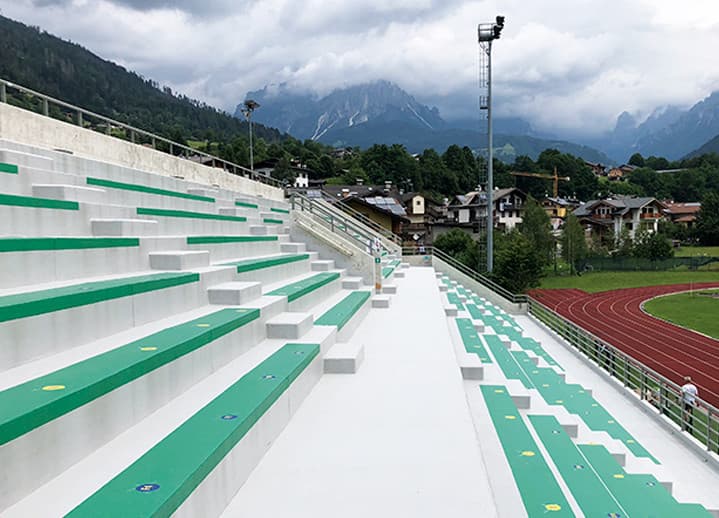
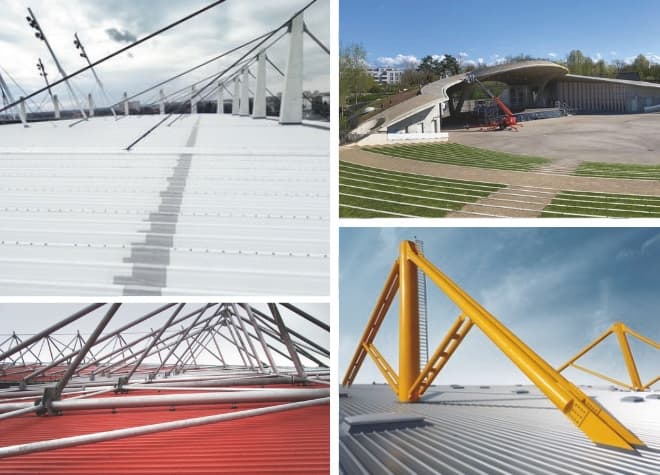
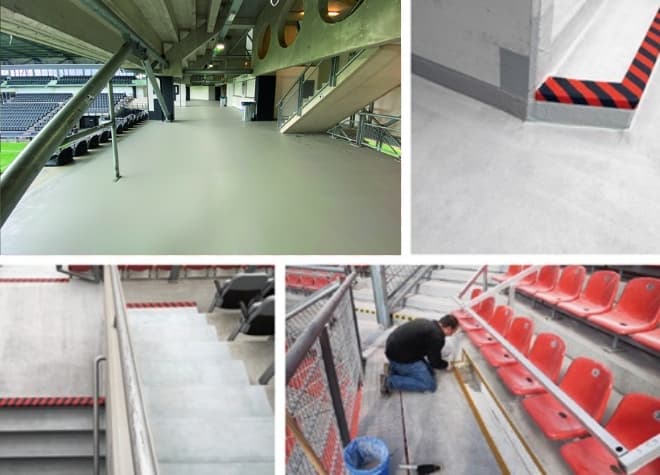
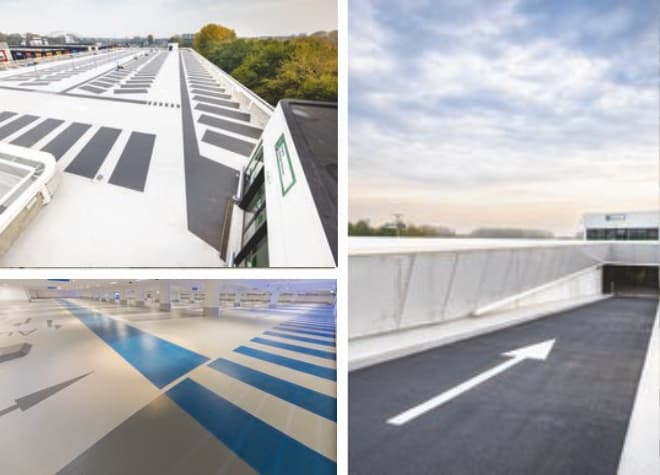
Triflex systems are used in virtually all high-traffic areas. These include grandstands, walkways, stairways, entrance areas, utility spaces, and roof structures. Parking decks, access roads, and logistics areas can also be integrated. Because the systems are applied as liquids, details, connections, and penetrations can be seamlessly incorporated into the overall system. This results in a permanently watertight and mechanically resilient surface across all functional areas.
In practice, construction work is carried out during scheduled time windows between events. Precise planning of the construction phases is crucial. The systems respond quickly and allow for the areas to be reused promptly. This enables individual construction phases to be completed on schedule without restricting the overall operations of an event venue for longer than necessary.
Grandstands, walkways, and stairs are exposed to high mechanical stresses, moisture, and temperature fluctuations. At the same time, they must remain slip-resistant and provide a secure footing at all times. Triflex systems combine waterproofing, a protective layer, and a wear layer in a coordinated structure. This results in surfaces that not only provide structural protection but also meet the requirements for visitor safety and usability.
Yes. Stadiums and event venues typically also include parking areas, access roads, and logistics areas. These areas are subject to heavy traffic. Triflex offers solutions for waterproofing beneath wear layers, as well as systems for marking and coating. This allows for the functional and durable implementation of traffic routing, safety zones, and parking areas.
In many projects, renovations are carried out on existing structures. The systems adapt to existing substrates and geometries. This allows existing structures to be preserved. Demolition work is minimized and construction times are shortened. At the same time, the functionality of the space is brought up to current technical standards.
In stadium construction, in particular, connections, joints, and transitions are especially critical. Fabric-reinforced liquid polymer systems bond fully to the substrate and are seamlessly integrated into details. This results in a homogeneous waterproofing membrane without any weak points. This attention to detail is crucial for the long-term functional reliability of the entire structure.
In addition to waterproofing, slip-resistant and colored wear layers can be applied. This allows pathways, safety zones, or functional areas to be clearly marked. Depending on the intended use, different slip resistance classes and surface textures can be implemented. This ensures that both design and safety requirements are met.
When waterproofing, coating, and marking are technically coordinated, the coordination effort required for the project is reduced. Interfaces between trades are minimized. This provides designers and building owners with a clearly structured solution featuring predictable maintenance intervals and a high level of operational reliability throughout the entire service life.