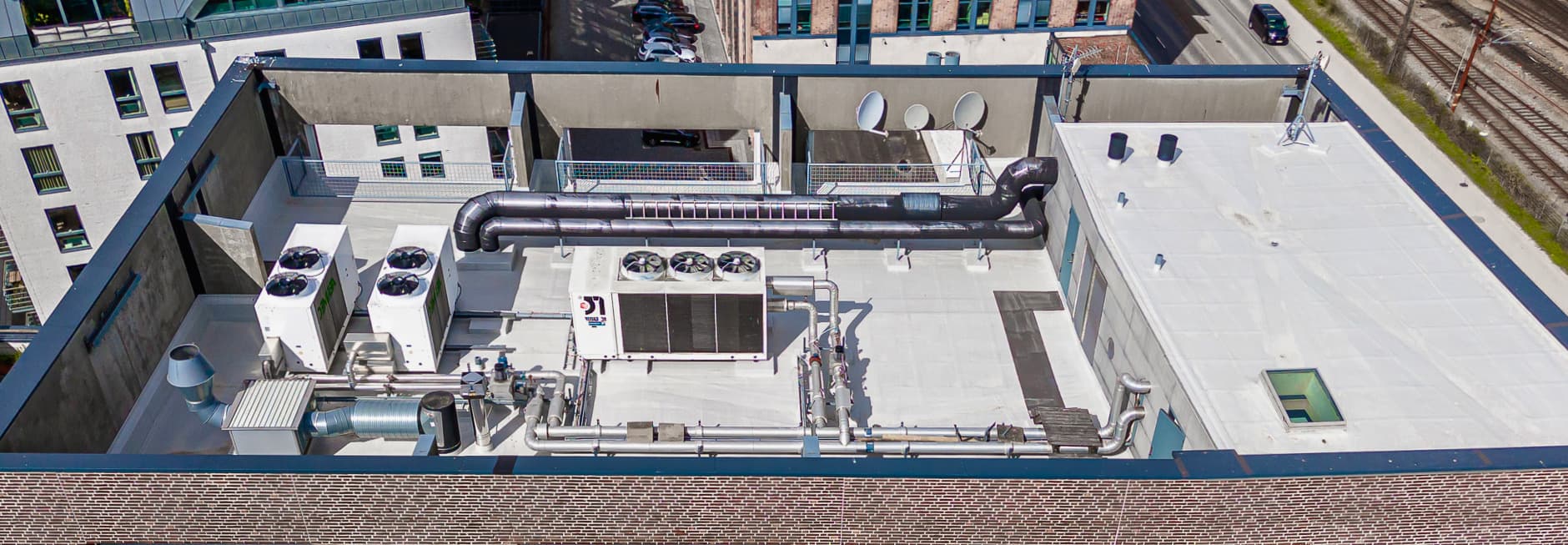
Why Details Require Special Waterproofing Solutions
Connections, joints and detail areas are among the most sensitive parts of building waterproofing. Different materials, movement and increasing exposure to weather and temperature fluctuations can lead to leaks, cracks and subsequent damage in these areas.
Triflex liquid polymer waterproofing systems solve exactly this problem:
They are applied in liquid form, adapt to every detail, and cure to form a seamless, fully adhered waterproofing membrane.
For you, this means:
- no joints → no water ingress
- reliable accommodation of movement → less cracking
- Permanently watertight connections → lower risk of damage
Whether it’s a new construction or a renovation: With Triflex, you get tested waterproofing systems for detail connections that have proven themselves in practice and deliver long-term performance.
40 Years of Safety, Down to the Last Detail.
Joints, penetrations, and transitions are among the areas of a waterproofing system that are subject to the most stress. This makes it all the more important to have a solution that functions reliably over the long term. KIWA has confirmed an expected service life of 40 years for Triflex ProDetail.
Find out which tests and field studies support this assessment.
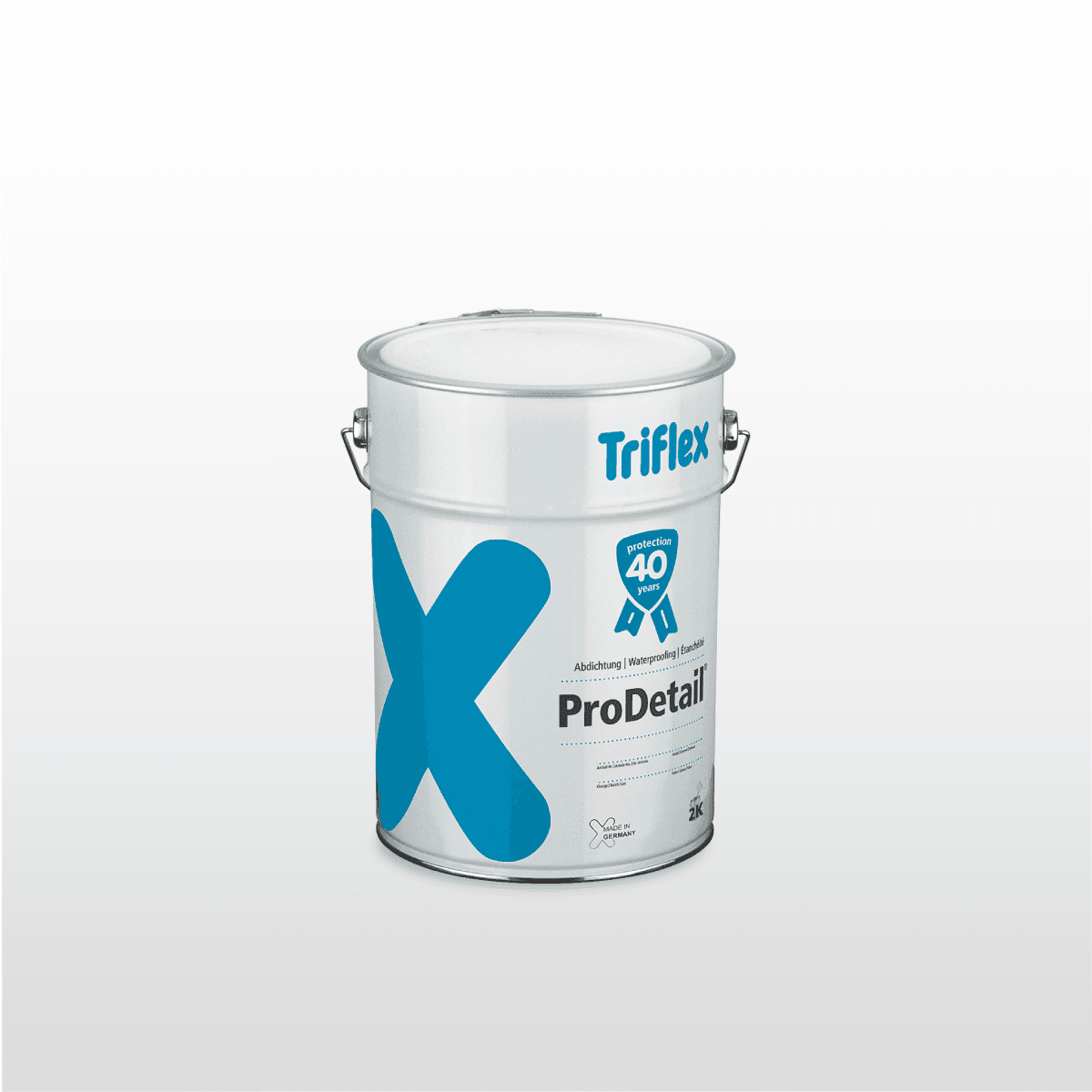
Overview of Applications
Overview of Applications
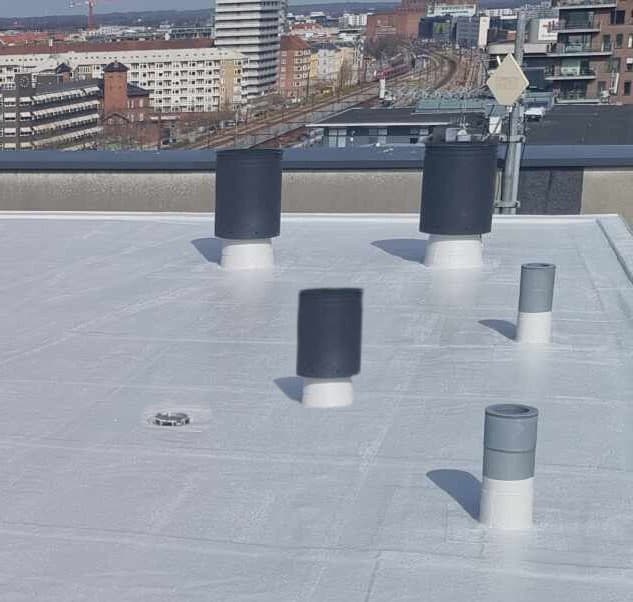
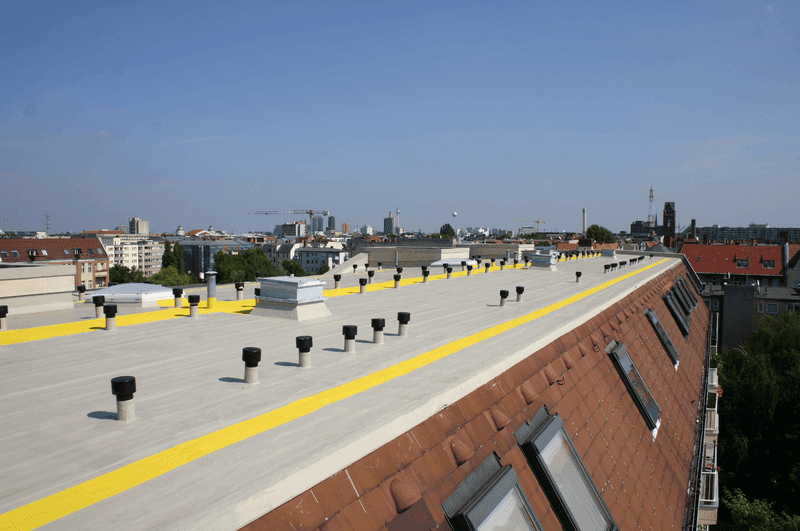
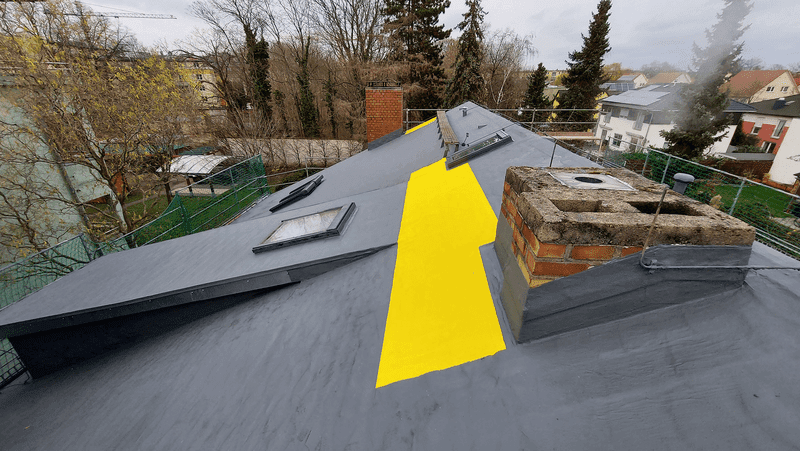
Roofs – Safe Down to the Last Detail
Detail waterproofing on roof surfaces must be able to withstand mechanical, thermal, and weather-related stresses over the long term.
With Triflex systems, you benefit from:
- reliable waterproofing even on thermally insulated or soft roof structures (load class P4)
- Tested fire classifications (BROOF (t1–t4))
- Hail impact testing in accordance with DIN EN 13583
- Easy application, even on vertical surfaces
Added value: reduced risk of damage to parapets, penetrations, and transitions—durable roof waterproofing without complex sheet metal constructions.
Overview of Applications
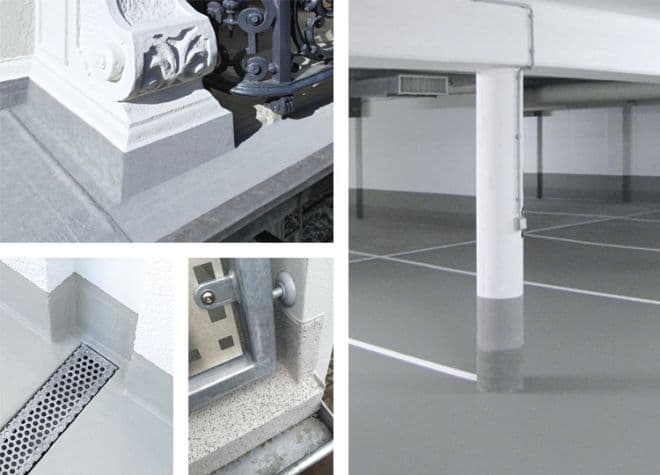
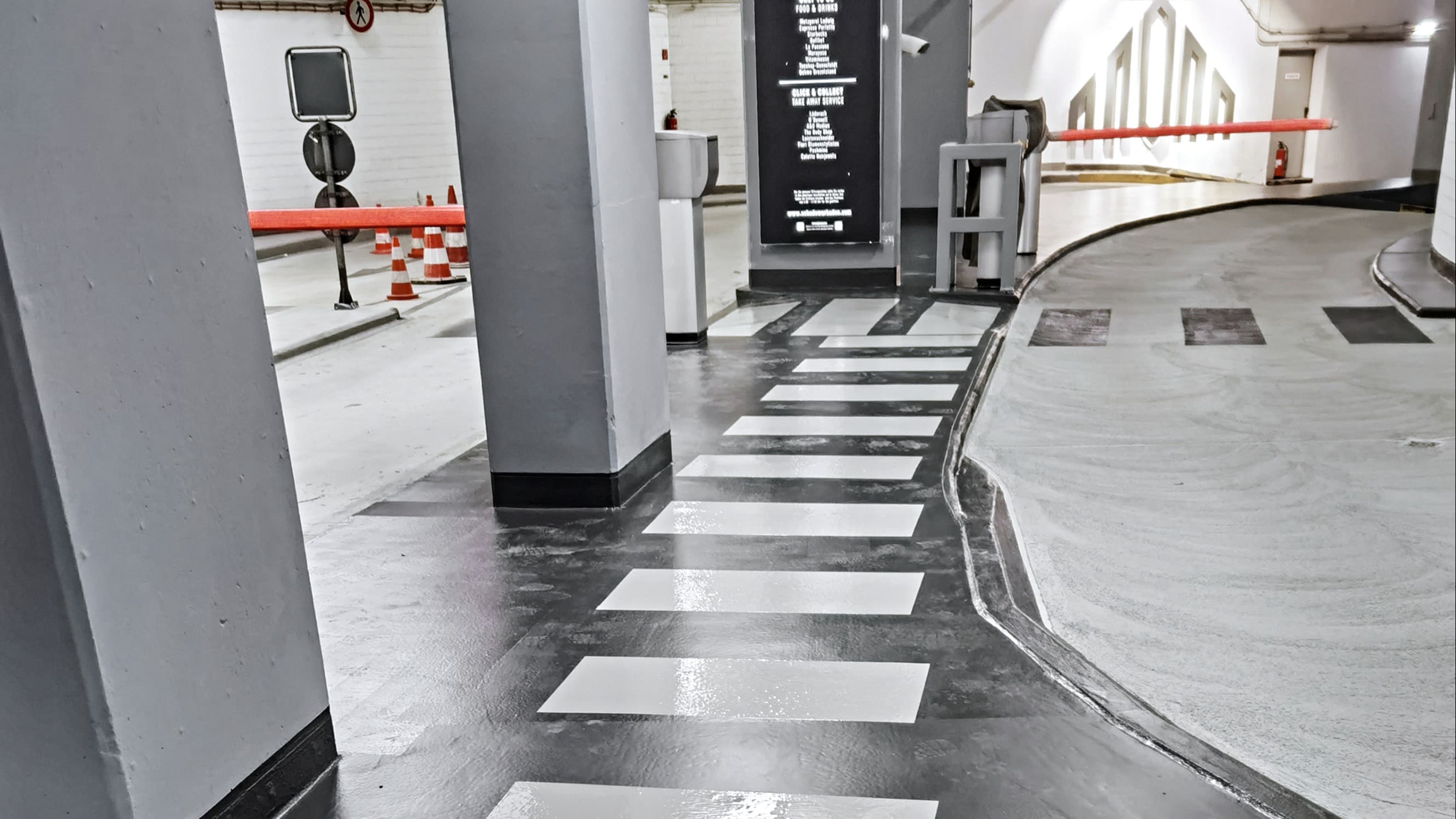
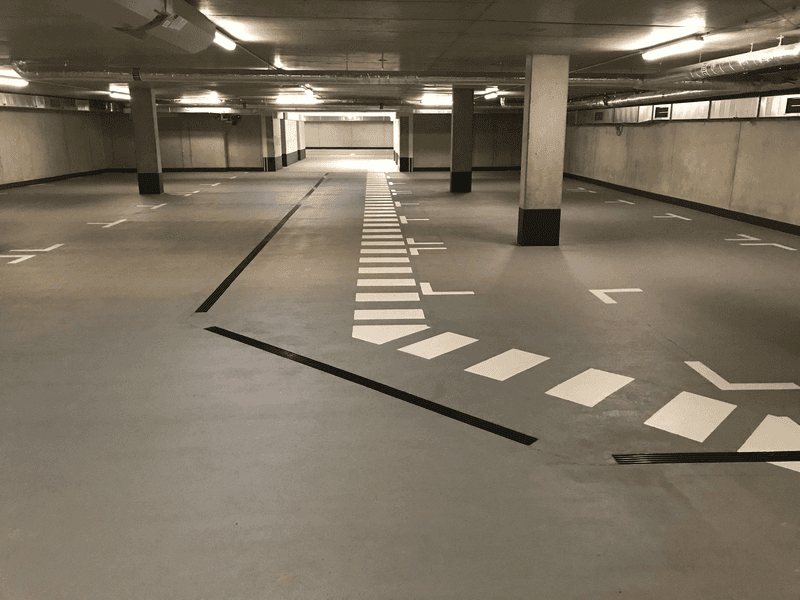
Balconies & Parking Garages – Mechanically Durable and Easy to Renovate
Connections in high-stress areas such as parking decks or balcony slabs must be able to withstand dynamic loads, temperature changes, and moisture over the long term.
Advantages of Triflex detail waterproofing:
- Can be applied to virtually any substrate geometry
- heat-resistant up to +50 °C for use under mastic asphalt
- Highly resistant to mechanical stress, even for areas subject to vehicle traffic
- Can be reworked at any time—ideal for maintenance
Added value: reliable connection details combined with cost-effectiveness in renovation projects.
Overview of Applications
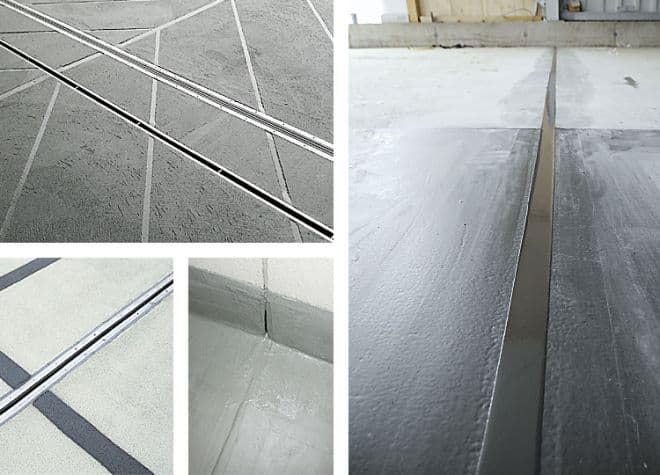
Joints – dynamically bridging cracks
Expansion joints and construction joints place special demands on the elasticity of the waterproofing.
Triflex systems offer:
- high elasticity combined with high load-bearing capacity
- Tested design of waterproof concrete joints in accordance with PG-ÜBB
- Suitable for use in areas subject to foot and vehicle traffic
- Heat resistance up to +250 °C (e.g., splash protection under mastic asphalt)
Added value: long-term functionality even under significant movement or temperature fluctuations.
Overview of Applications
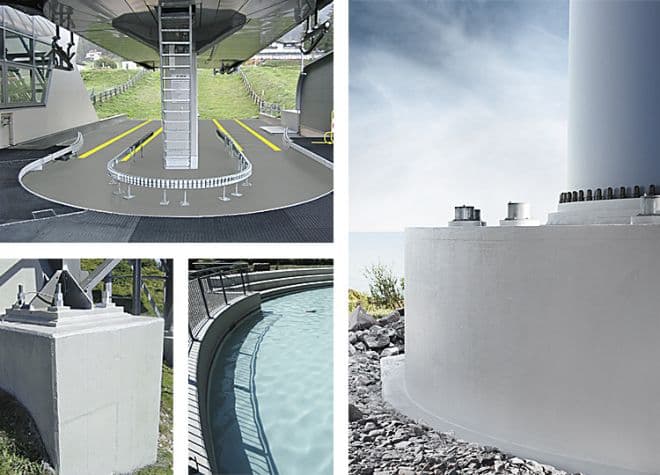
Foundations & Basements – Permanently Protected
In areas in contact with the ground, waterproofing is subjected to particularly high stresses.
Triflex systems stand out for:
- full-surface geotextile reinforcement
- Adhesion to damp concrete
- UV-, hydrolysis-, and alkali-resistant properties
- Tested fire classification according to DIN EN 13501-1
Added value: long-term protection against moisture penetration, even under challenging substrate conditions.
Why Liquid Plastic Is the Best Solution for Details
Unlike roll goods or rigid systems, liquid plastic adapts to any shape.
This results in:
- no weak spots at joints
- no leakage through open joints
- no need for complex custom solutions
This not only reduces risks but also significantly simplifies planning and installation.
Durable and reliable detail waterproofing increases the resilience of buildings to climate-related stresses.
Answers to the Most Important Questions About Detail Waterproofing with Liquid Plastic
Joints and details are particularly vulnerable because they involve a combination of different materials, component movement, and loads. Temperature fluctuations and stresses can quickly lead to leaks.
With membrane-based waterproofing systems, seams and overlaps further increase the risk. Standards such as DIN 18531 therefore set high requirements for the design of these areas.
Seamless, liquid-applied systems enable the reliable formation of connections and significantly reduce typical weak points.
Liquid plastic is the best solution when complex geometries, connections, or penetrations need to be reliably sealed. The material conforms precisely to the substrate and provides a seamless, joint-free seal without any weak spots.
Liquid polymer offers significant advantages over membrane-based waterproofing, particularly for challenging details, renovations of existing structures, or areas with numerous transitions.
Liquid plastic offers greater reliability in installation, particularly when sealing details. The material adheres fully to the substrate, is flexible, and permanently bridges cracks.
Compared to bitumen or synthetic membranes, the effort required to form details is significantly reduced. Even in renovations of existing buildings, lower installation heights and direct application to existing substrates are often possible.
In addition, liquid polymer systems are characterized by high weather resistance, fast curing times, and good adaptability to various substrates.
Detail connections are properly sealed by preparing the substrate and applying the waterproofing directly to the surface and adjacent components. It is crucial to securely integrate connections, penetrations, and transitions into the overall system.
Liquid-applied waterproofing systems are applied over the entire surface and reinforced with geotextile. This creates a flexible, crack-bridging, and permanently adhesive waterproofing membrane that can accommodate movement and securely bonds to different materials.
The installation method depends on the specific requirements of the structural element as well as applicable standards and regulations. Triflex provides detailed application instructions for its systems at Downloadbereich.
Detail waterproofing with liquid polymer is designed for long-term use and, when properly installed, provides permanently reliable solutions. It is flexible, crack-bridging, and withstands weathering and mechanical stress for many years.
Independent tests on service life are also available for selected systems. For example, Triflex ProDetail has been proven to have a service life of up to 40 years. Mehr erfahren...
The actual service life depends on the system used, the environmental conditions, and proper installation.
Proper detail waterproofing depends primarily on the substrate, movement requirements, and load conditions. Another key factor is whether the application involves rigid connections, dynamic joints, penetrations, base areas, or surfaces that are accessible to pedestrians and vehicles.
Liquid polymer systems can be flexibly adapted to different detail configurations and enable tailored solutions for many applications. Digital planning tools such as the Triflex Systemfinder and consultation with Triflex technical advisors assist in selecting the appropriate system.
References

Your local Triflex support
Our experts support you from the first inquiry all the way to the completion of your project.
Triflex Support