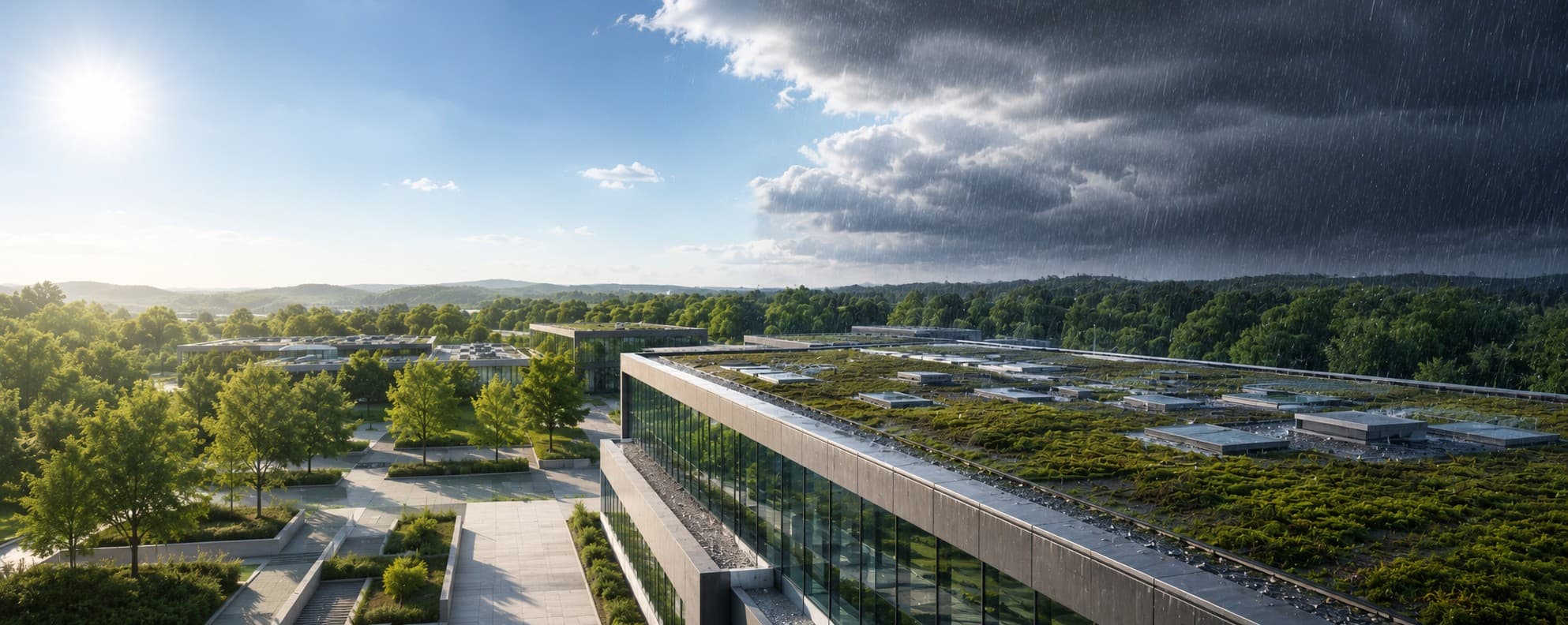
Climate-resilient. Not someday. Now.
Climate resilience starts with durable system solutions
Heat, heavy rainfall, hail and storms are placing increasing strain on roofs, connections and exposed building components. If weak points are not protected in time, moisture damage, operational disruptions and high consequential costs may result.
Triflex systems support the climate adaptation of buildings: They protect sensitive components, can be repaired locally and help to safeguard functionality, extend refurbishment cycles and preserve property value over the long term.
What climate risks affect buildings?
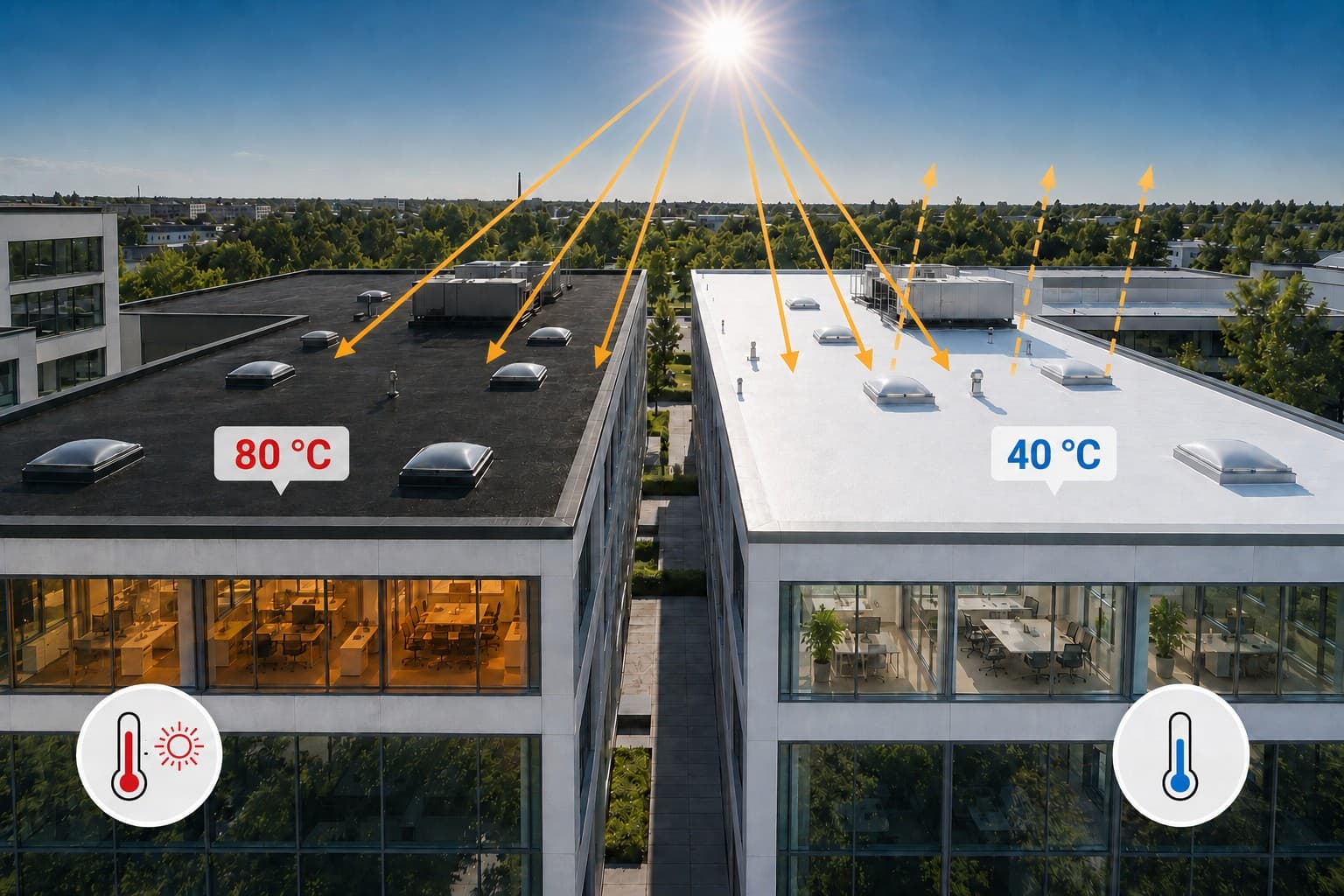
Extreme heat exposure
High surface temperatures put stress on roof waterproofing and materials. Strong temperature fluctuations can accelerate ageing, while additional heat input may impair summer heat protection and indoor comfort.
Triflex contribution: Light-coloured, reflective roof surfaces reduce heat build-up and relieve stress on the roof structure.
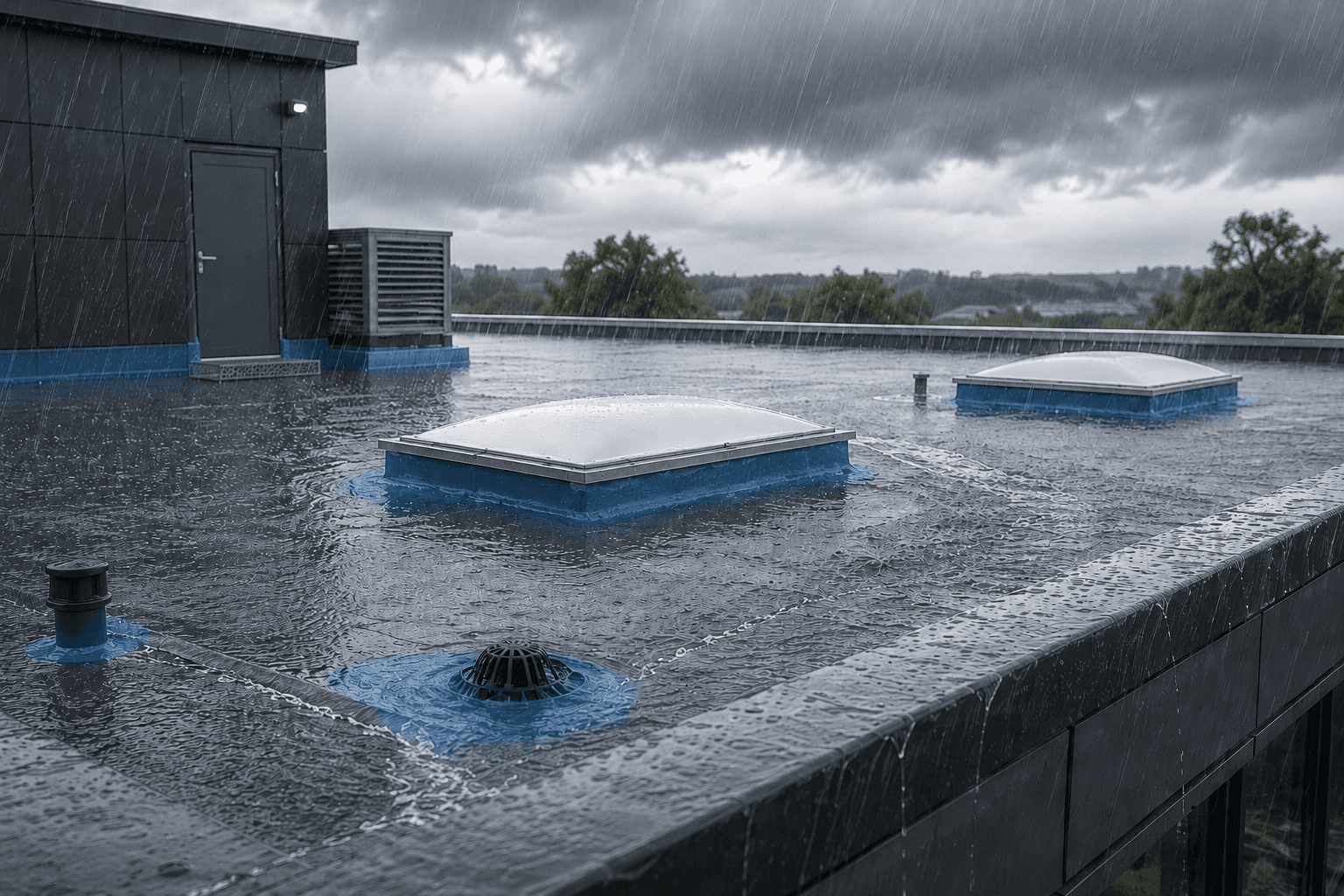
Heavy rain and flooding
Heavy rainfall puts drainage systems and waterproofing under strain. Standing water further increases moisture exposure. Connections, penetrations, upstands and transitions are particularly critical, as water can penetrate the structure at these points.
Triflex contribution: Seamless, fully bonded waterproofing protects particularly vulnerable details. In areas at risk of flooding, it forms part of a project-specific protection concept.
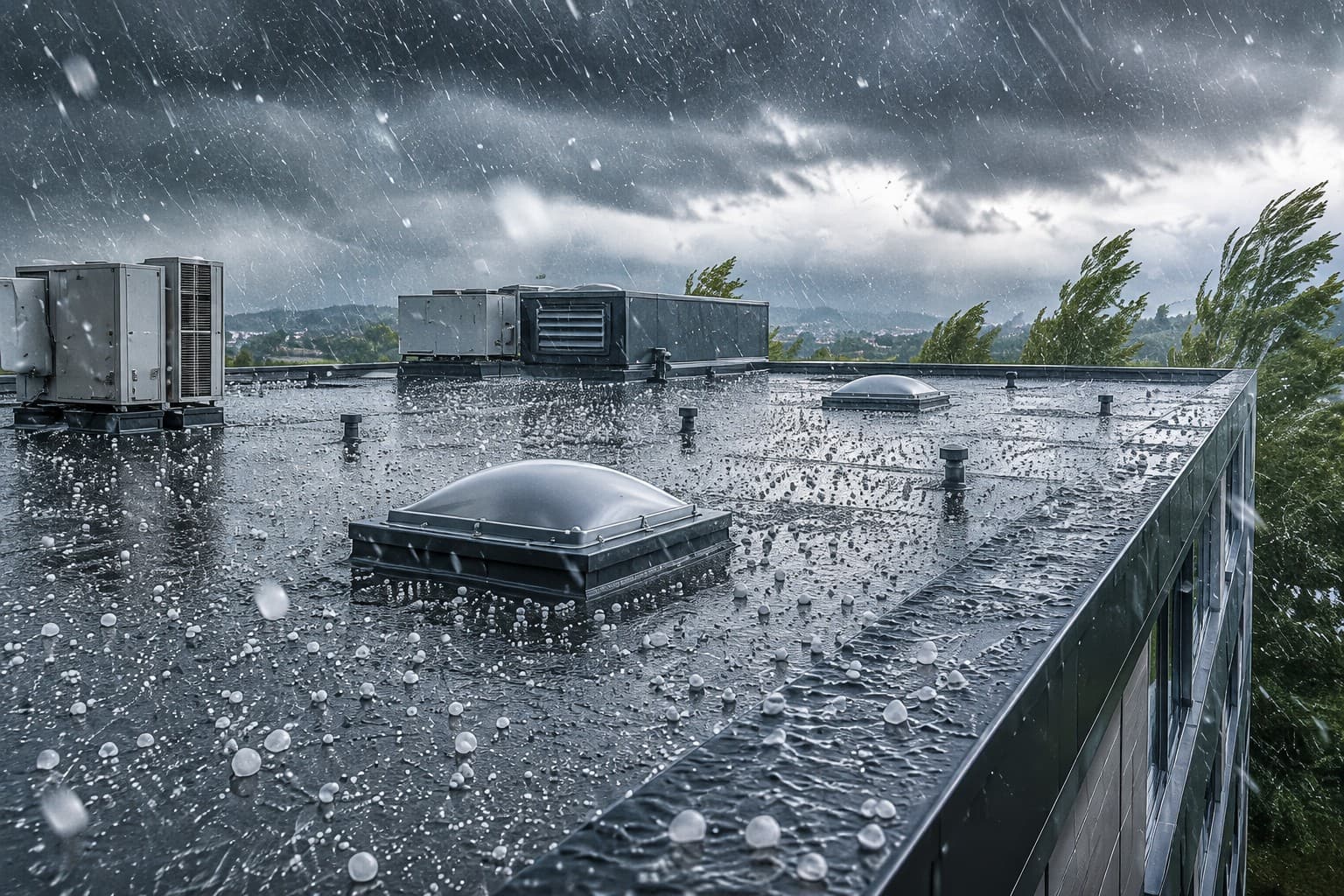
Hail, storms and snow
Hail and storms place mechanical stress on roof surfaces, edges and technical installations. Snow, by contrast, mainly increases the structural load on the roof. Especially in existing buildings, limited load reserves can therefore become a particular challenge.
Triflex contribution: Tested and robust waterproofing systems protect exposed components without imposing high additional loads.
Longer-lasting protection. Back in use faster.
Climate-resilient buildings need systems that provide long-term protection, can be repaired selectively and keep additional loads to a minimum. Triflex combines durable waterproofing, coating and repair solutions for use throughout the building.
- Durable: High-quality systems provide lasting protection for buildings and adjacent surfaces against moisture, weathering, UV radiation and mechanical stress.
- Repairable: Individual damaged areas can be repaired locally without having to renew entire surfaces.
- Quick return to use: Short curing and reaction times reduce closures, downtime and disruption caused by construction work.
- Lightweight construction: Low additional weight reduces the load on the roof structure and offers advantages where load reserves are limited.
- Cost-effective over the life cycle: Fewer repairs, longer refurbishment intervals and reduced downtime improve overall life-cycle costs.
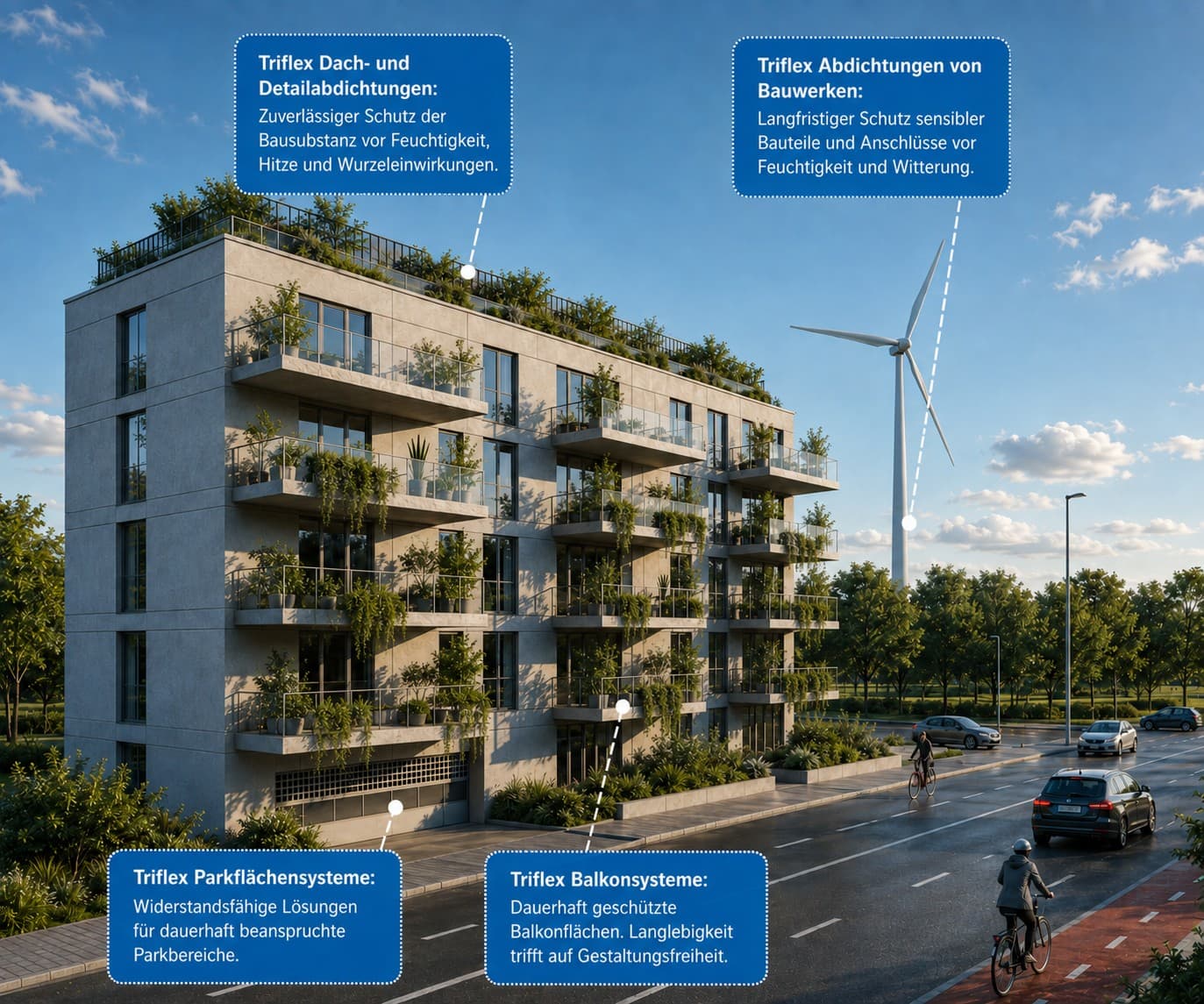
DURABLE. COST-EFFECTIVE.
Benefits and evidence for climate-resilient buildings
- Up to 40 years
Expected service life according to the extended ETA (technical assessment basis, not a guarantee).*
- 3 kg/m²
Low system weight compared to traditional waterproofing systems.
- 110 km/h
Hail impact test passed (5 cm ice balls, selected systems). Suitability must be assessed individually for each building.
- 30–50%
Lower surface temperature (°C) with ProSolar Finish+.
Triflex Solutions in Practice
Climate resilience results from the interaction of various measures. These applications show how Triflex specifically protects buildings against climate-related stresses and functionally upgrades existing roof areas.
Protecting roof surfaces from heat
Bright, reflective surfaces reduce roof heating and heat transfer into the building.
Dark roof surfaces absorb a large proportion of solar radiation and can heat up significantly. This places additional strain on the roof waterproofing, increases thermal stress and can create unfavourable conditions for photovoltaic systems.
Triflex ProSolar Finish+ reflects a large proportion of solar radiation and reduces the surface temperature by 30–50%. Suitable existing roof waterproofing systems can be retained and functionally upgraded.
- Reduce surface temperatures
- Reduce thermal stress on the waterproofing
- Reduce heat transfer into the building
- Preserve existing roof waterproofing systems
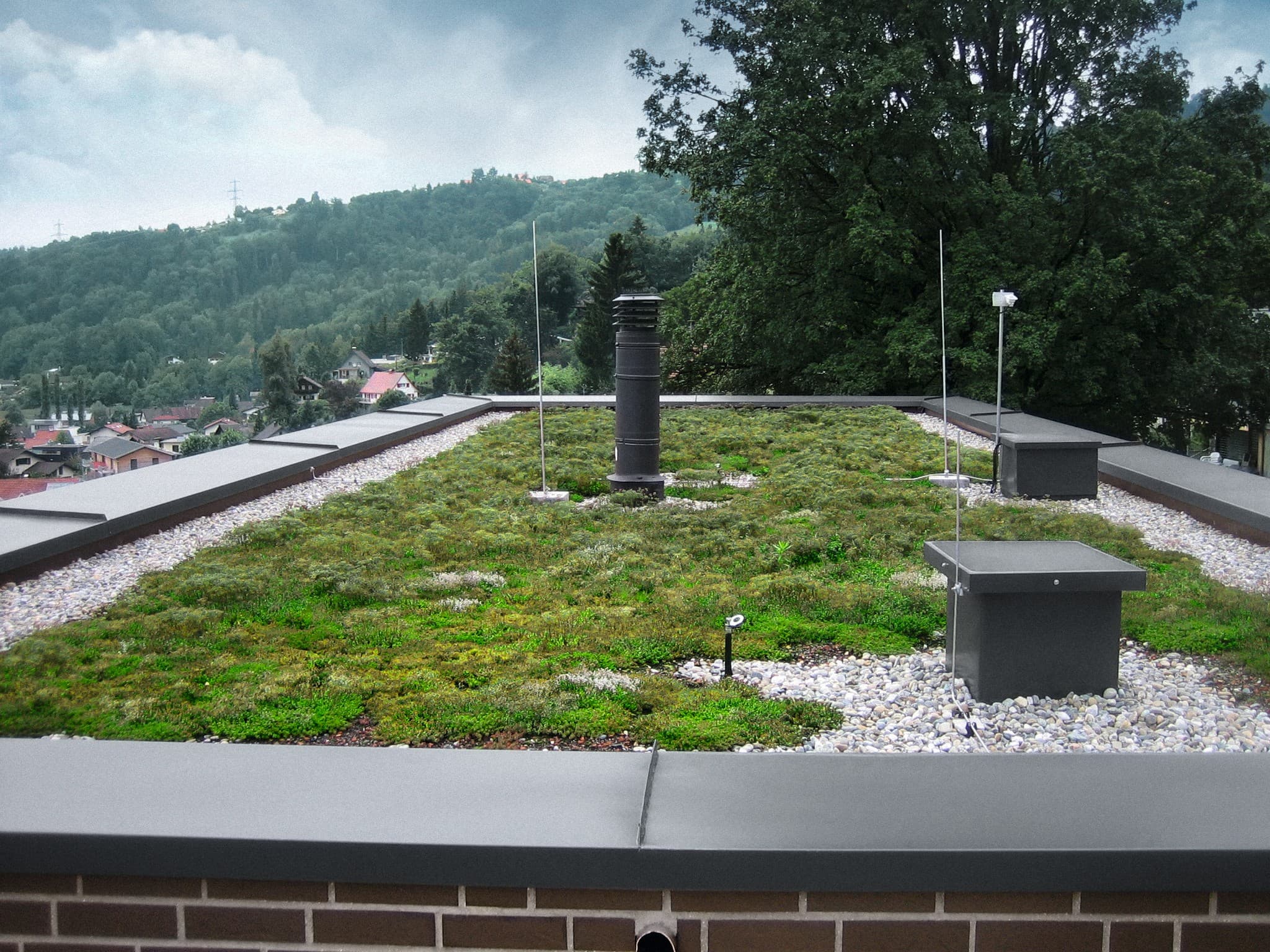
Reliably waterproofing green and retention roofs
Retain water, promote evaporation and better adapt buildings to increasing rainfall.
Green and retention roofs can absorb rainfall, reduce peak runoff and support the microclimate. A permanently reliable waterproofing system is essential. Triflex reliably protects surfaces, connections and penetrations, creating the basis for durable roof constructions.
- Retain rainfall and reduce peak runoff
- Enable evaporation and support the microclimate
- Reliably prevent root and rhizome penetration
- Permanently protect connections and penetrations
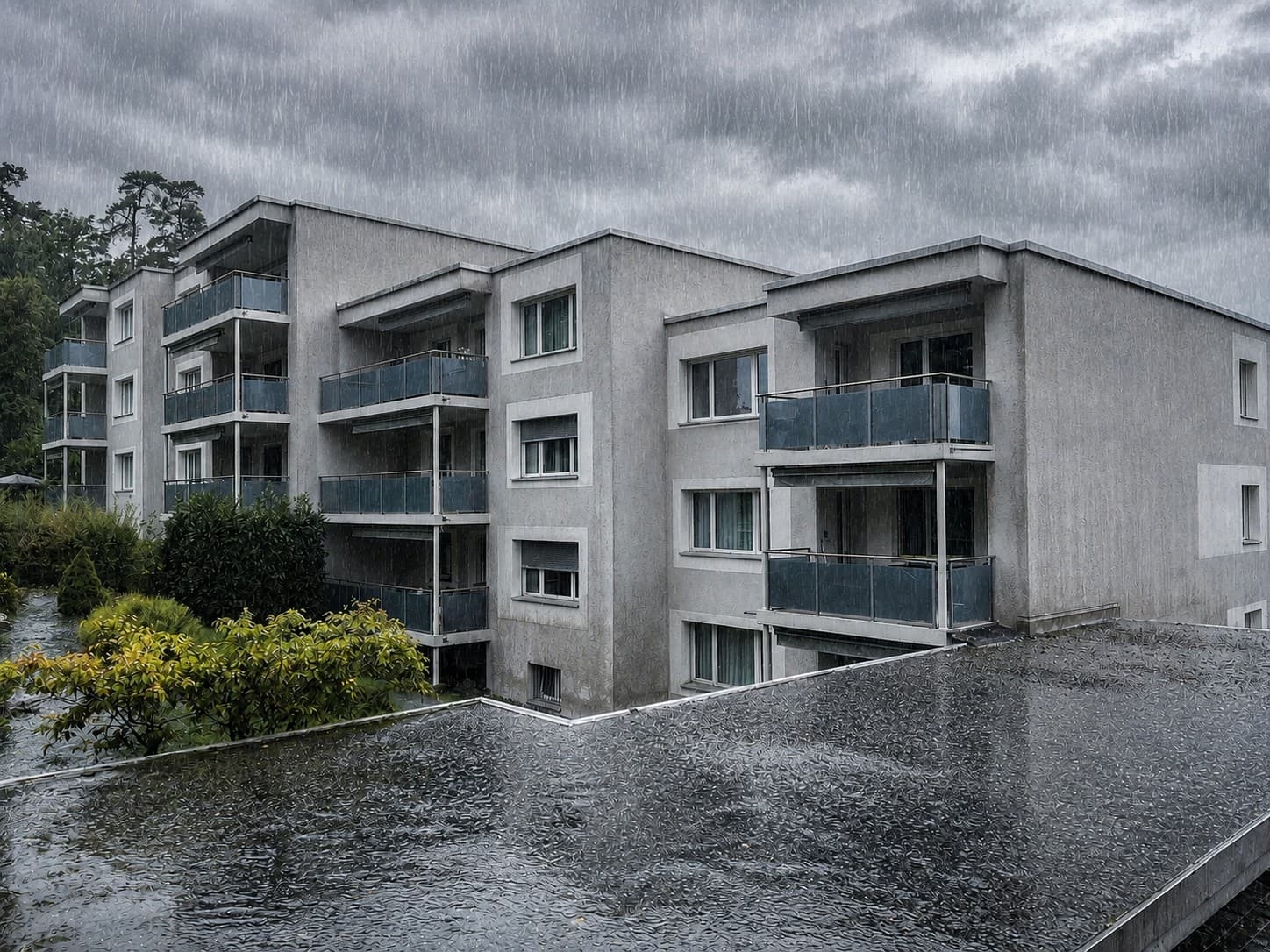
Protect buildings against heavy rainfall and flooding
Reliably protect sensitive building areas against moisture and water ingress.
Heavy rainfall and temporary flooding can place particular stress on plinth areas, connections, upstands and transitions. Seamless, fully bonded Triflex waterproofing systems reliably protect vulnerable building components. Where there is a risk of flooding, they can form part of a project-specific protection concept.
- reliably waterproof critical building details
- protect connections and transitions seamlessly
- prevent moisture damage to the structure
- support project-specific protection concepts

Low system weight helps preserve the existing load reserves of existing roofs.
Many existing roofs offer potential for photovoltaic systems but have only limited load reserves. Lightweight Triflex waterproofing systems keep additional loads low and reliably seal connections and penetrations.
- low additional system weight
- preserve existing load reserves
- provide lasting protection for the roof before PV installation
What does climate resilience mean to you?
Owners and investors
- Preserve property value and usability Protect the building fabric against heat, moisture and heavy rainfall.
- Reduce consequential costs from climate impacts Prevent damage at an early stage and reduce the need for costly subsequent refurbishment.
- Future-proof the portfolio Adapt existing buildings to new climate-related requirements and further develop roof areas.
Frequently Asked Questions About Climate-Resilient Buildings
A climate-resilient building is designed, constructed or refurbished to withstand the effects of heat, heavy rainfall, hail, storms and other extreme weather events more effectively. The aim is to limit damage, maintain the building’s usability wherever possible and preserve its long-term value.
Flat roofs, balconies, terraces, access balconies and basement areas are particularly exposed. Details such as joints, connections, penetrations, roof drains and transitions to vertical building components are especially important. These areas are particularly susceptible to moisture, temperature fluctuations and mechanical loads.
Liquid-applied waterproofing forms a seamless, fully bonded protective layer. Complex details such as connections, penetrations, upstands and drains can also be securely integrated into the waterproofing. This reduces the risk of water tracking beneath the waterproofing or entering the structure through joints. Professionally designed roof drainage nevertheless remains essential.
Triflex ProSolar Finish+ reflects a large proportion of solar radiation. Under comparable conditions, the surface temperature can be reduced by 30 to 50 percent compared with dark roof surfaces. This reduces the thermal load on the roof structure and can help reduce heat transfer into the building. The actual effect depends, among other factors, on solar radiation, outdoor temperature, wind, roof construction and insulation.
Wybrane systemy hydroizolacyjne Triflex zostały przebadane z użyciem kul lodowych o średnicy pięciu centymetrów przy prędkości 110 km/h. Elastyczne, w pełni zespolone systemy chronią eksponowane powierzchnie i wrażliwe detale. W przypadku ograniczonych rezerw nośności zaletą może być również niewielka masa systemu, wynosząca około 3 kg/m². Przydatność systemu i nośność konstrukcji muszą zostać sprawdzone indywidualnie dla każdego budynku.
In many cases, the existing waterproofing can remain in place if the substrate is stable and suitable for continued use. Following an appropriate inspection, preparation and, where necessary, priming, the Triflex system can be applied directly. This reduces demolition work, waste, construction time and disruption to building use. A professional assessment of the existing roof construction is always required.
For selected Triflex waterproofing systems, the relevant European Technical Assessments assume an expected working life of up to 40 years. This figure is a technical assessment basis and not a guarantee. Because the systems are fully bonded, damaged areas can often be repaired or supplemented locally. Regular inspections and professional maintenance support long-term performance.
Triflex provides technical documentation, Environmental Product Declarations (EPDs) and product passports, among other resources. ProCA compliance declarations from EPEA are also available for key products. They support planning, tendering and sustainability assessments in accordance with DGNB, LEED, BREEAM, BNB and QNG, as well as requirements of the EU Taxonomy.