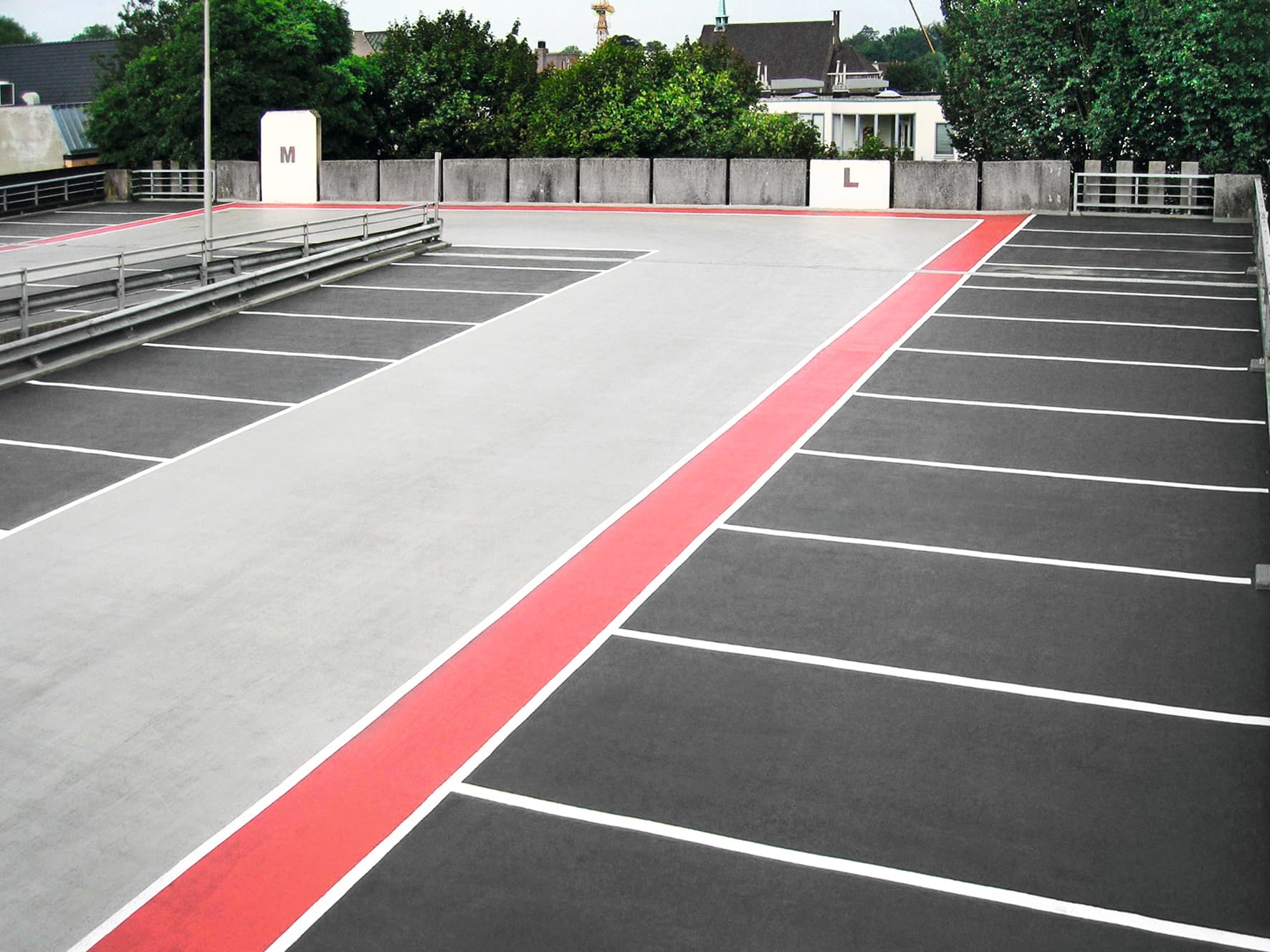
Sealing, Coating, Protecting
Triflex PMMA Liquid Plastic
Use PMMA to Permanently Protect Structures from Moisture
Polymethyl methacrylate, or PMMA for short, is a reactive liquid plastic that is particularly well-suited for waterproofing and coating buildings. When applied in liquid form, PMMA forms a seamless, fully adherent protective layer that reliably shields structures from moisture and external influences.
Moisture often penetrates building components unnoticed and can lead to significant long-term damage to the building structure. PMMA-based waterproofing systems specifically counteract this risk. They are permanently watertight, mechanically robust, and can be used even under demanding conditions.
For over 40 years, Triflex has been developing PMMA systems in close collaboration with specialized contractors and designers. The goal is to provide a technically sound, practical, and durable solution for every construction situation.
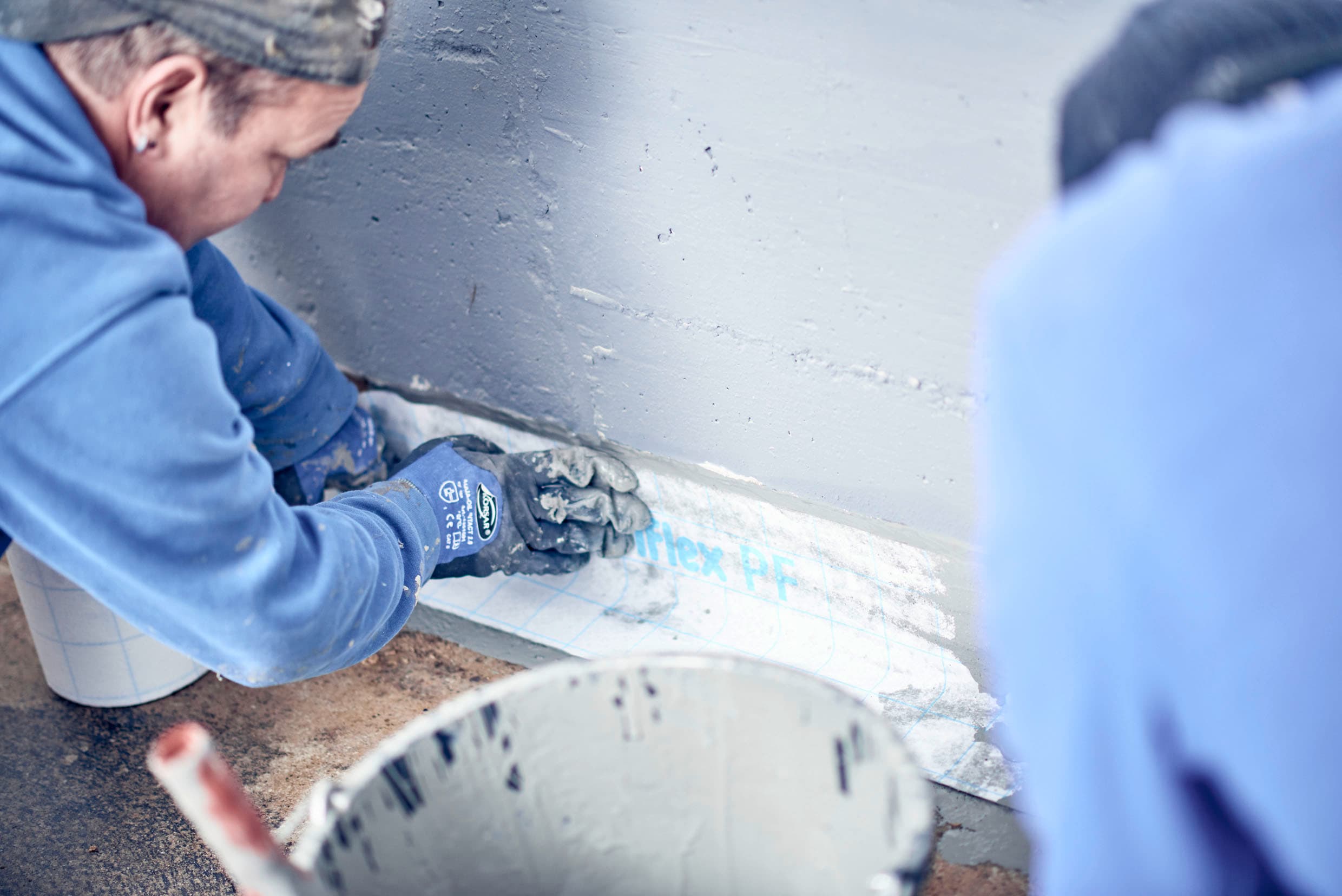
These properties make PMMA a versatile material for sealing and coating solutions in the construction industry.
What Sets PMMA Apart
- Seamless
Seamless, full-surface adhesion even with complex geometries and detailed connections.
- Consistent
Resistant to weather, chemicals, and mechanical stress.
- Reactive
Reactive curing allows for short closure and downtime periods.
- Versatile
Base materials for sealants, coatings, and marking systems.
- Efficient
Short construction times, minimal road closures, and durable systems ensure a high degree of planning reliability and low costs.
Technical Advantages of PMMA Seals
PMMA is specifically designed for use in exposed and high-stress areas. The material’s technical properties ensure a permanently tight, durable, and low-maintenance seal—even under demanding environmental conditions.
- Resistant to weathering and UV radiation
- High elasticity to accommodate temperature-induced component movement
- Resistant to chemical exposure, e.g., from de-icing salts, oils, or fuels
- High mechanical load-bearing capacity, such as from vehicles or intensive use
These properties form the basis for the versatile applications of PMMA systems in the construction industry.
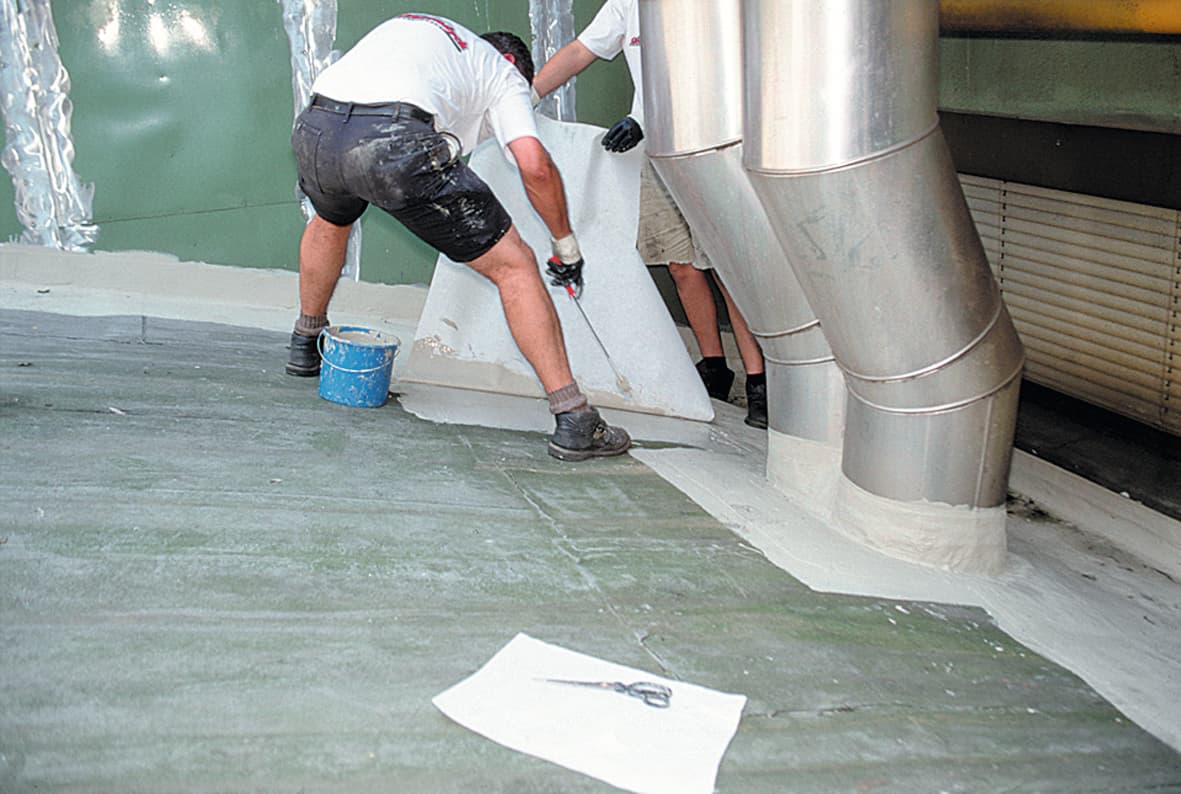
Applications of PMMA Liquid Plastics
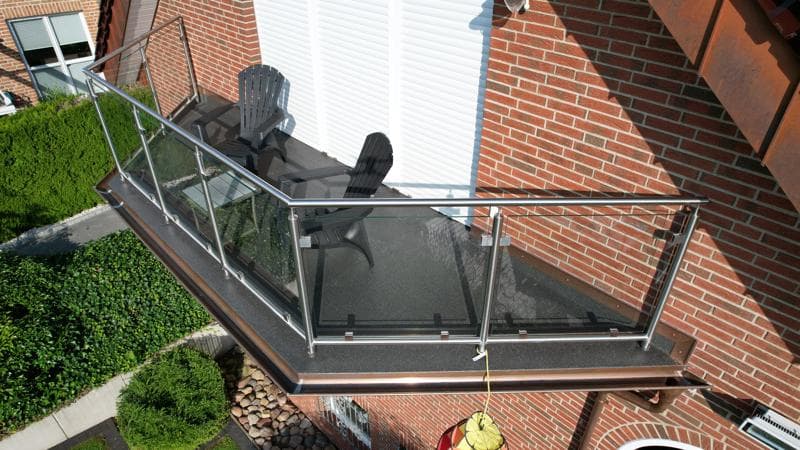
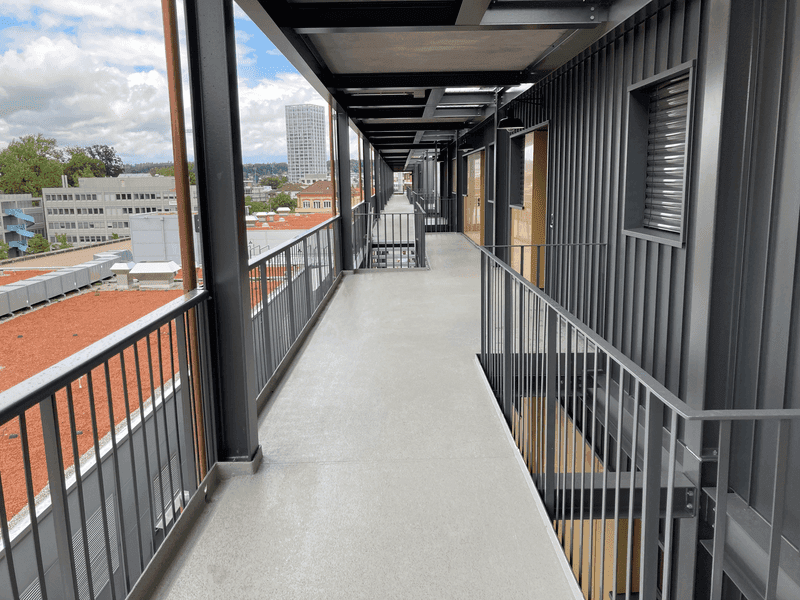
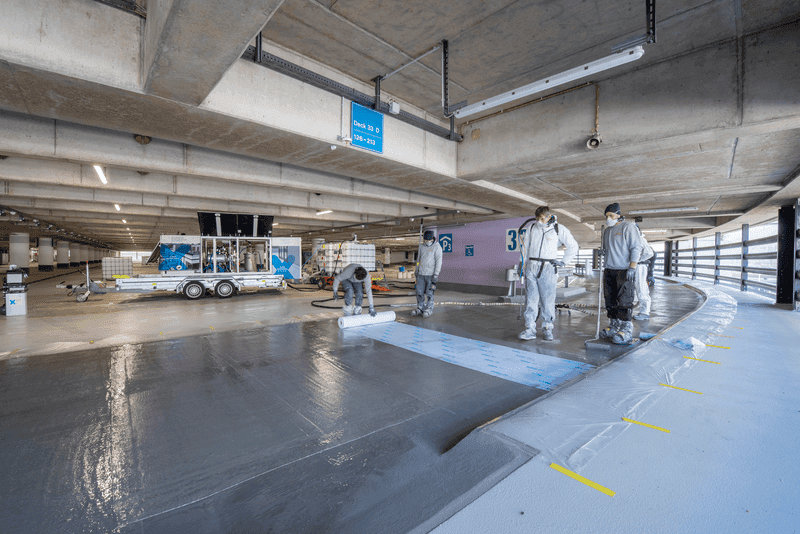
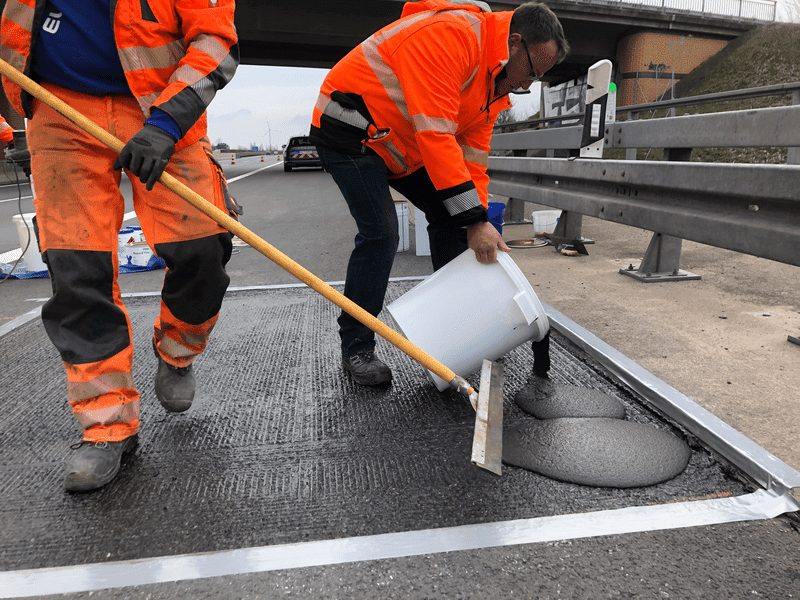
PMMA systems are used in any application where components must be permanently protected from moisture while remaining capable of withstanding mechanical stress.
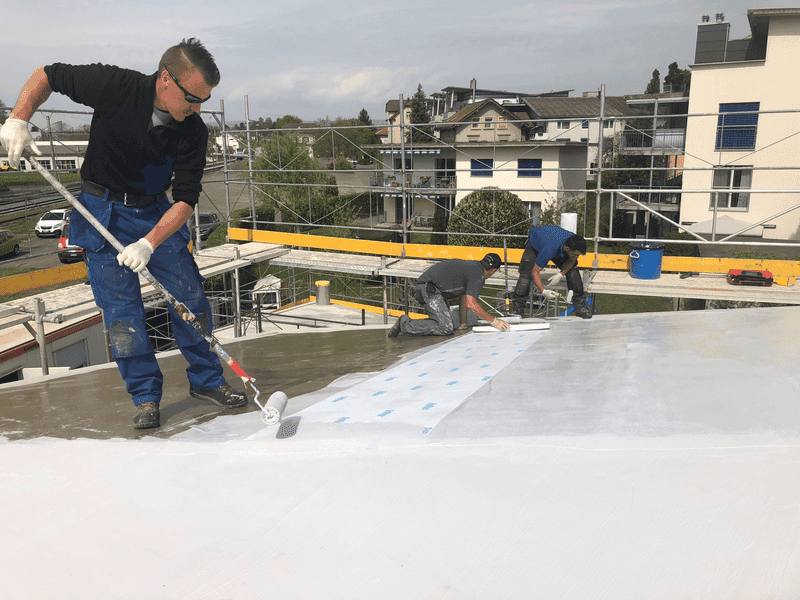
Processing with PMMA
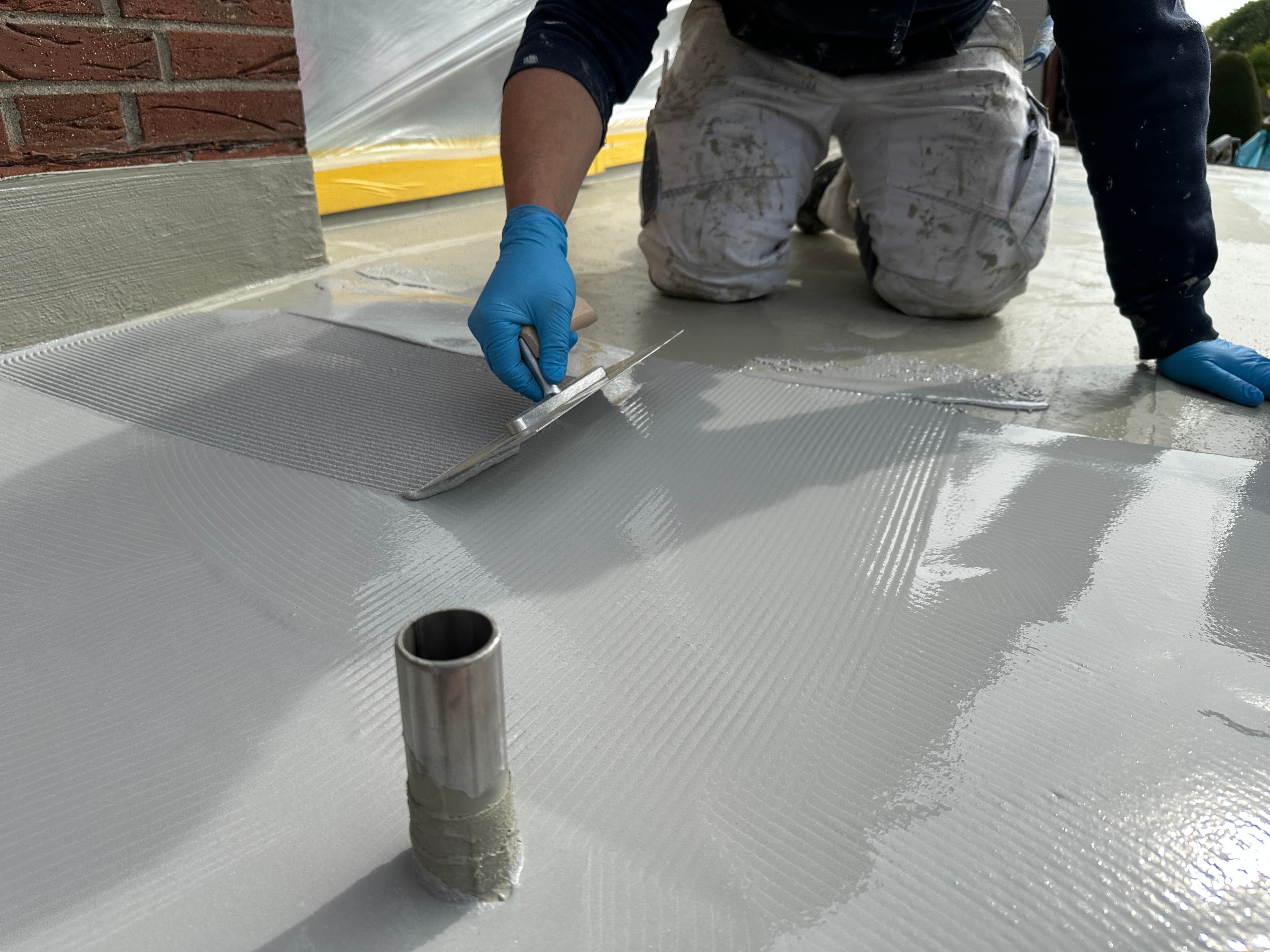
PMMA systems are mixed directly on the job site and applied in liquid form. Depending on the requirements, they are applied manually—for example, with a roller or trowel—or, for larger areas, by machine.
Thanks to the material’s rapid curing, the waterproofing is typically rainproof after a short time and fully cured in less than an hour. The surface can then be put back into use. This significantly reduces downtime and enables swift project completion.
PMMA can be applied regardless of weather conditions at temperatures of 0 degrees Celsius or higher. This allows waterproofing work to be carried out almost year-round—even during renovations while operations are ongoing.
Design and Marking with PMMA
In addition to its sealing function, PMMA offers a wide range of options for surface design. Colored coatings, markings, or textured surfaces can be specifically integrated into the system.
Design applications include public spaces, traffic areas, and the aesthetic enhancement of balconies and terraces. Additionally, functional markings for wayfinding or traffic guidance can be implemented.
By optionally incorporating quartz sand, the slip resistance can be customized to ensure safe use even in wet conditions.