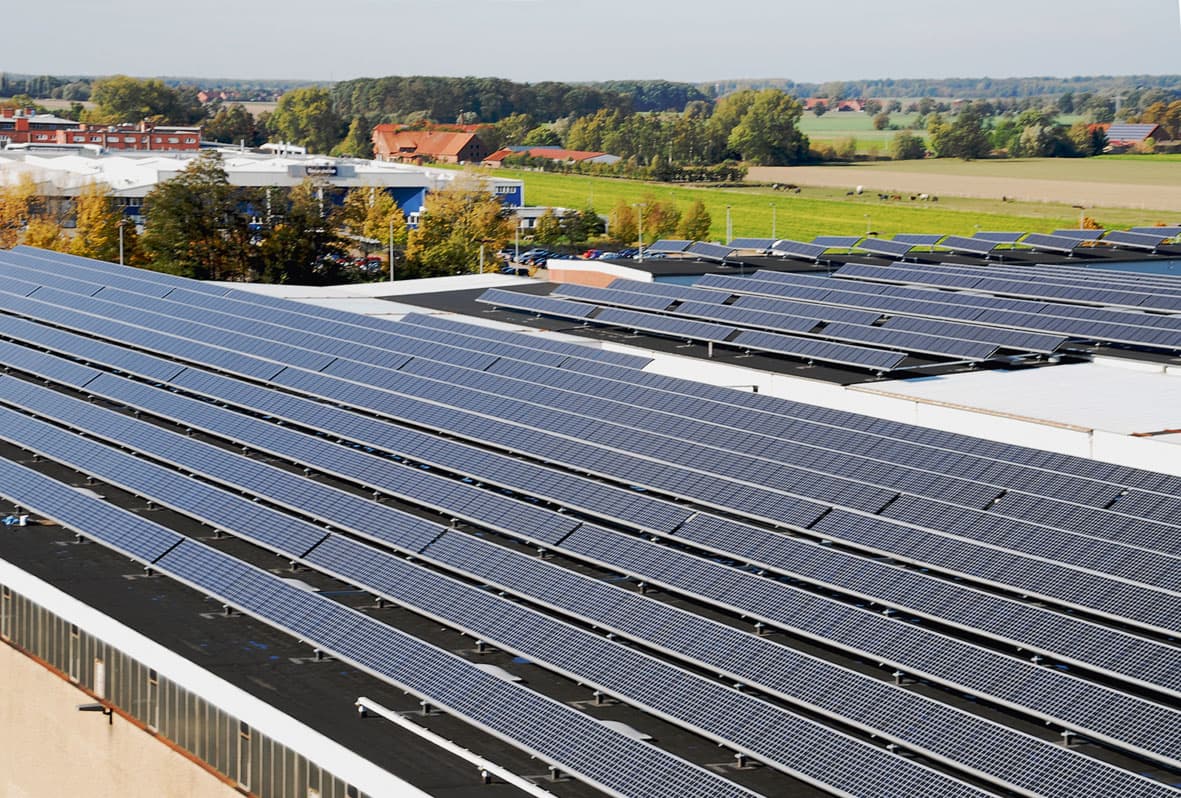
Sealing Systems for Photovoltaics, Wind Energy, and Energy Infrastructure
Renewable Energy Solutions
Solar and wind energy facilities place high demands on waterproofing and construction details. Triflex liquid polymer systems provide long-lasting protection for roof surfaces, foundations, and connections against moisture and mechanical stress.
Sealing Solutions for Energy Systems That Provide Reliable, Long-Term Performance
Solar and wind energy systems are constantly exposed to the elements, temperature fluctuations, and mechanical stress. Roof surfaces, foundations, penetrations, and connections to various substrates are particularly critical. Waterproofing systems are required that securely integrate details, accommodate movement, and provide long-term protection against moisture.
Performance characteristics of Triflex systems:
Durable – Expected service life of at least 25 years and extended renovation intervals.
Versatile – Solutions for roof surfaces, foundations, penetrations, and transitions.
Detail-oriented – Nonwoven-reinforced waterproofing of connections, joints, and surfaces without seams.
Strong adhesion – Excellent adhesion to various substrates and material combinations.
Durable – Resistant to hydrolysis as well as chemical and mechanical stresses.
Fast-curing – Short curing times and rapid project completion.
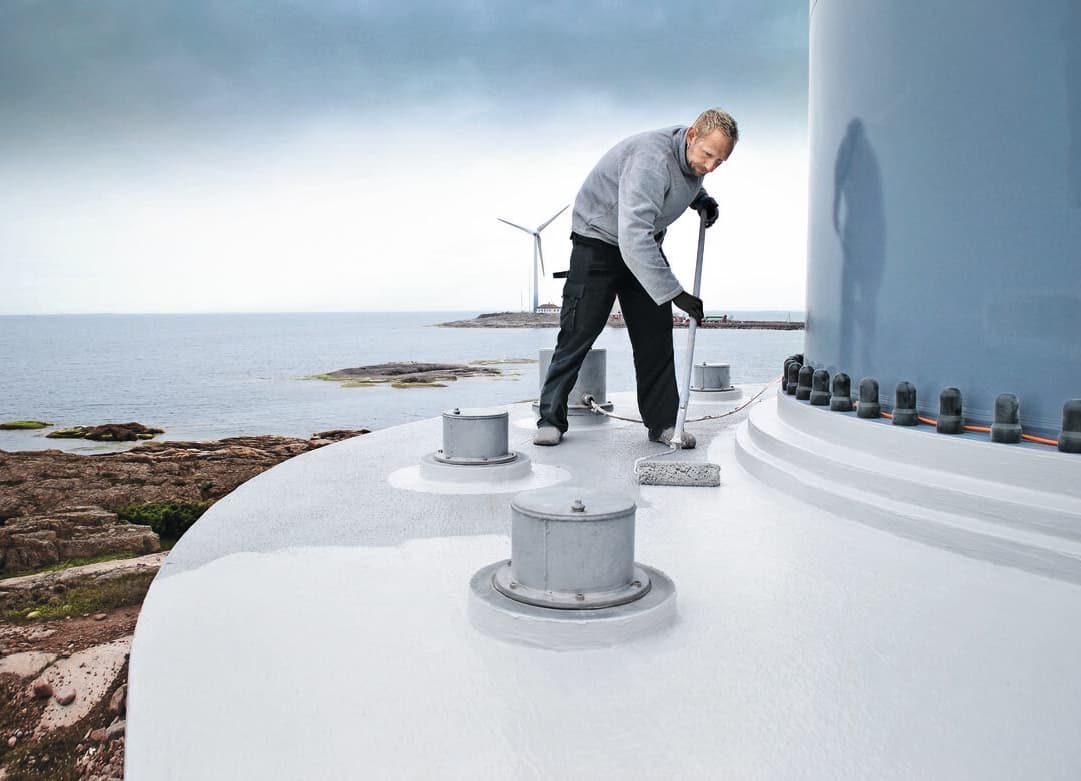
Overview of Applications
Triflex waterproofing systems are used in a variety of structures in the energy generation sector. Depending on the type of facility, the focus is on roof surfaces, foundations, or complex detail connections.
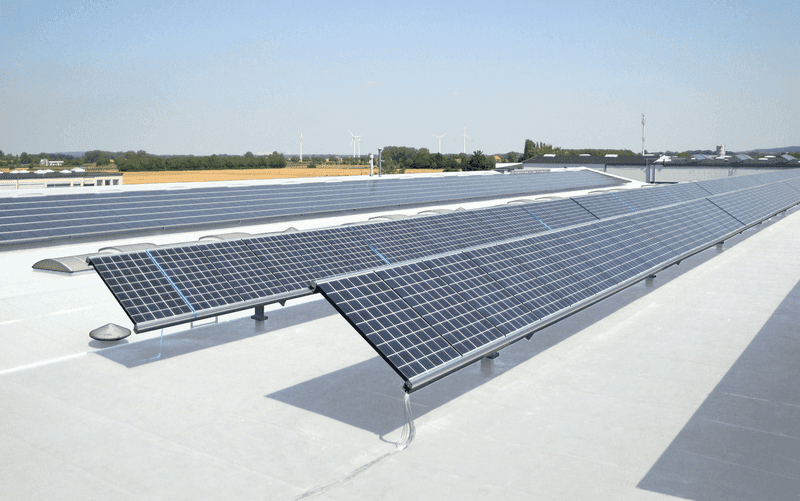
Photovoltaics and Solar Roofs
Waterproofing of roof surfaces, substructures, and penetrations in new construction and renovation projects. Permanent integration of supports, cable penetrations, and connections.
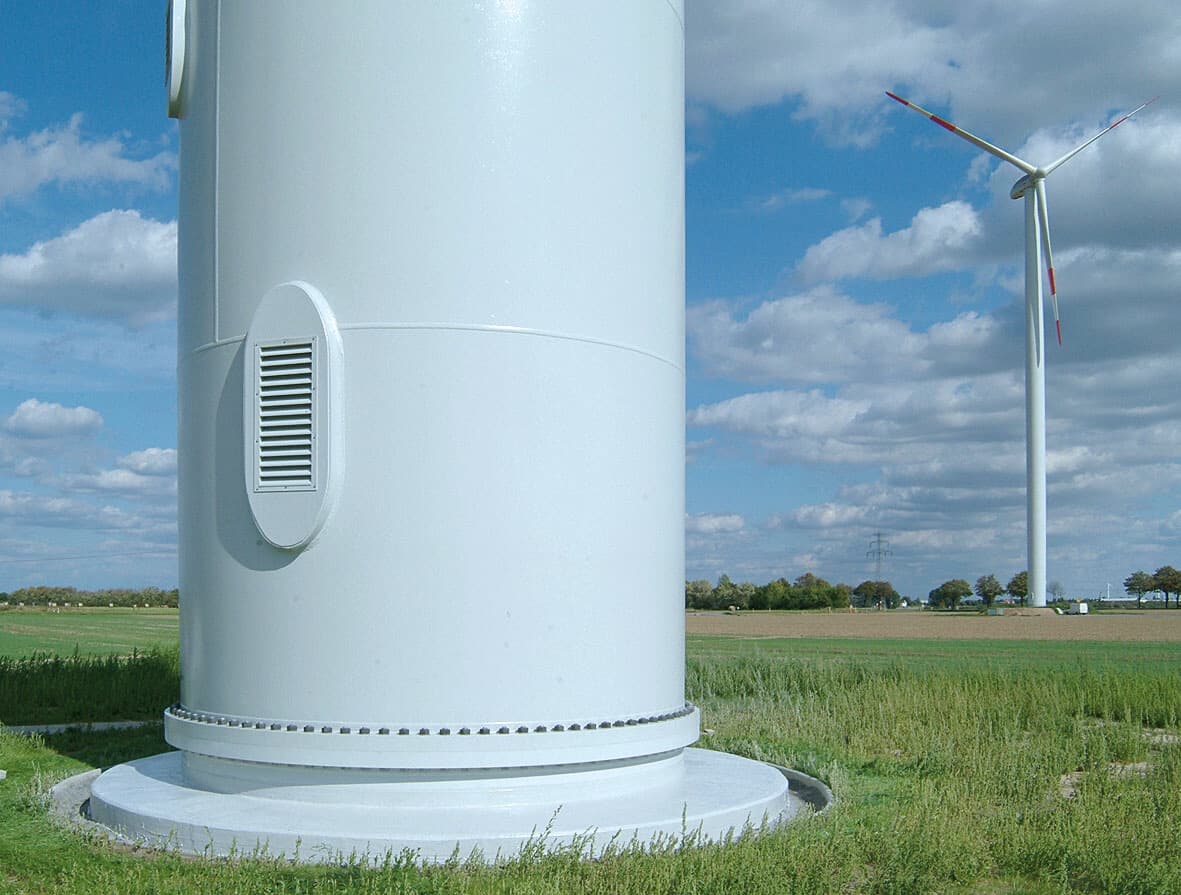
Wind Turbines
Protection of foundations and interfaces between concrete and steel. Permanently elastic joint design to safely accommodate movement.
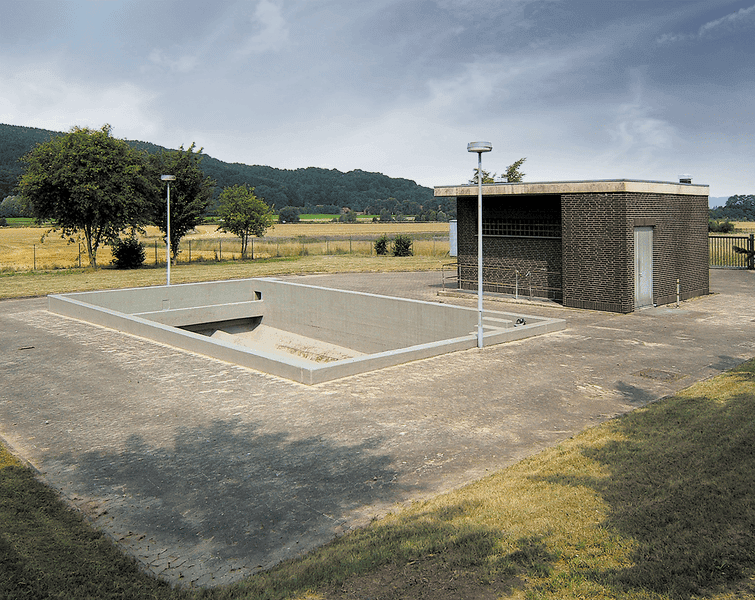
Energy Infrastructure and Technical Areas
Waterproofing of transformer stations, utility buildings, retention basins, and adjacent areas. Secure bonding of different substrates and building components.
System Solutions for Solar, Wind, and Energy Infrastructure
Triflex develops project-specific liquid polymer systems for waterproofing roof surfaces, foundations, penetrations, and technical structures in the renewable energy sector. Depending on the construction project, the focus is on surface waterproofing systems, detail-oriented connection solutions, or permanently elastic foundation waterproofing.
All systems are fabric-reinforced, permanently elastic, and allow for the secure integration of a wide variety of substrates—from concrete and steel to existing roof waterproofing membranes.
Proven Systems in Use:
The following are examples of solutions for typical requirements in the field of renewable energy projects.
Flat roof waterproofing under photovoltaic systems
- Highly reflective surface to reduce roof heating
- Interior temperatures up to 4 °C lower
- Reduced air conditioning and operating costs
- Optimized module temperatures to increase PV output
- Durable waterproofing with high mechanical resistance
- Quick application with minimal downtime and disruption
e.g., Triflex ProSolar Finish+
Reliable detail waterproofing of penetrations
- Integration of cable penetrations and supports
- Seamless waterproofing of connections, joints, and transitions
- Reliable adhesion to various substrates
- Permanent accommodation of movement
e.g., Triflex ProDetail
Foundation and tower connections for wind turbines
- Waterproofing of tower bases and foundation rings
- Permanently elastic accommodation of movement between concrete and steel
- Protection against moisture and frost-deicing salt exposure
- Proven system for onshore wind farms
e.g., Triflex TowerSafe
FAQ – Waterproofing Solutions for Renewable Energy Projects
In particular, roof surfaces beneath photovoltaic systems, cable penetrations, parapets, foundation rings, tower bases, and transitions between concrete and steel are constantly exposed to the elements, temperature fluctuations, and mechanical stresses. Proper waterproofing protects these areas from moisture, corrosion, and premature material fatigue.
Solar PV systems place additional thermal loads on the roof surface. At the same time, they create numerous penetrations and mounting structures that must be securely integrated. The waterproofing must remain permanently watertight, accommodate movement, and function with minimal maintenance over the long term, even beneath the module racks.
In many cases, it is possible to renovate an existing roof without having to completely remove it. Liquid polymer systems can be applied to a variety of substrates and allow for a seamless renovation of the existing waterproofing—provided the substrate is structurally sound and properly prepared. Jetzt unsere Experten hierzu befragen...
Highly reflective surfaces significantly reduce the amount of heat absorbed by the roof surface. This can lead to lower indoor temperatures, reduced air-conditioning costs, and optimized module temperatures. Cooler modules operate more efficiently, which can have a positive impact on the performance of the photovoltaic system. Mehr zu Triflex ProSolar Finish+ erfahren...
In the area around the base of the tower, different materials and movements come into contact with one another. Concrete, steel, and foundation connections must be permanently protected against moisture. At the same time, waterproofing systems must be able to accommodate movement in order to prevent cracking and leaks.
Mehr über Abdichtungen von Turmsockeln erfahren...
Nonwoven-reinforced systems are permanently elastic and offer high mechanical strength. They are resistant to weathering, frost and de-icing salt exposure, as well as chemical effects, making them suitable for demanding energy infrastructure projects.
Yes. Liquid membrane systems can be used to waterproof utility buildings, transformer stations, retention basins, and adjacent concrete surfaces. The seamless application allows for the reliable integration of complex details and transitions.
With proper planning and installation, these systems can have a long service life. The actual service life depends on the substrate, the level of stress, and maintenance. High-quality liquid polymer systems are designed for long-term performance and operational reliability.