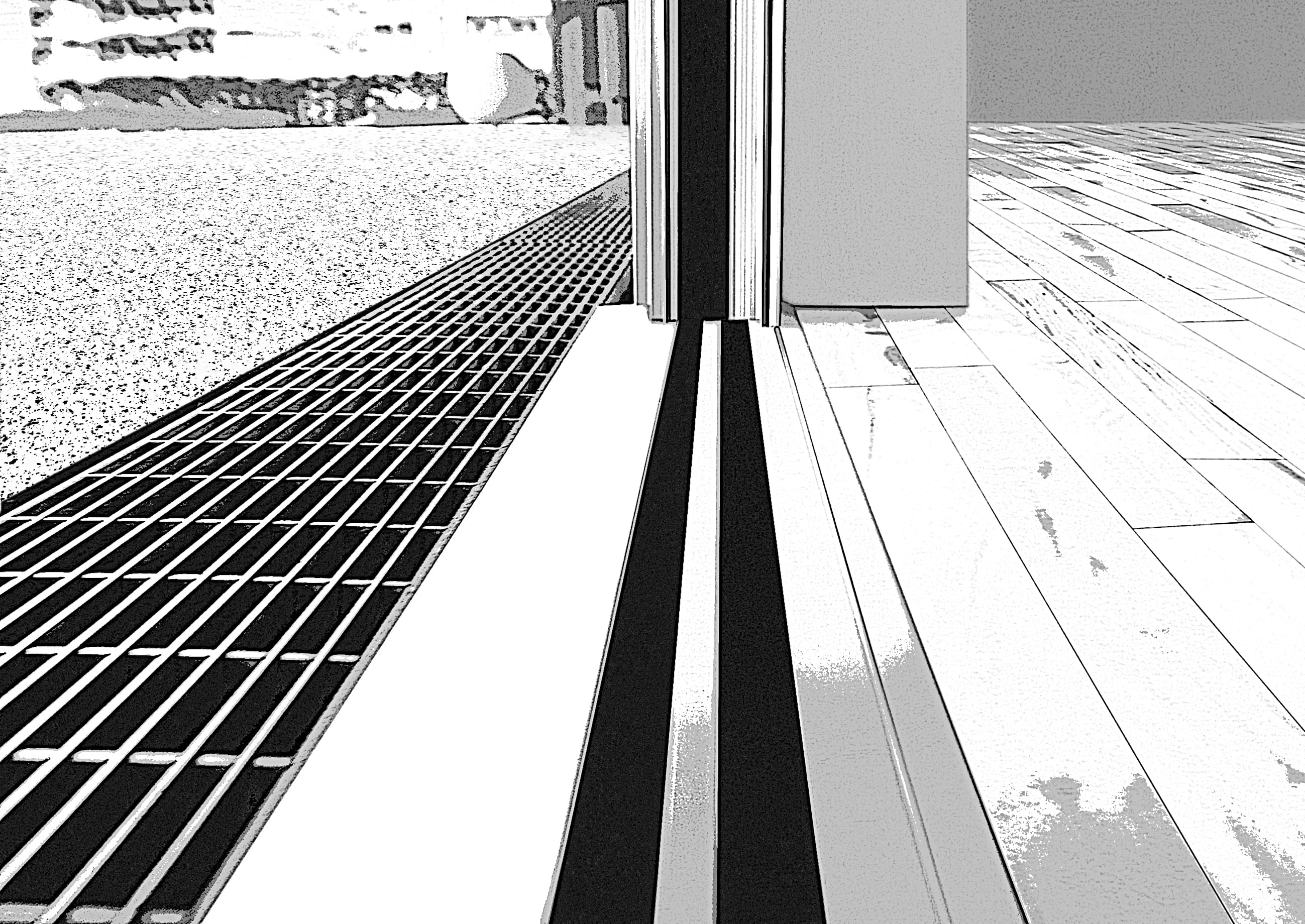
Certified System Solutions for Zero-Threshold Crossings
Seal Window Joints Securely with Liquid Plastic
Secure building connections for floor-to-ceiling French doors and barrier-free thresholds
Barrier-free threshold-free transitions are standard today—but they place the highest demands on the waterproofing of window and door joints.
Especially in the area of zero-threshold installations, different materials, movements, and water loads come together in a very confined space.
The risk:
Leaks, adhesion issues, and unclear responsibilities among the various trades.
Triflex offers tested waterproofing systems for window joints that make these critical details reliably manageable—compliant with standards, durable, and practical to implement.
Why are window connections at zero-thresholds particularly critical?
Window and door connections are among the most common causes of damage in the construction industry because:
- different materials come into contact with one another (e.g., concrete, plastic, aluminum)
- movement occurs due to temperature changes
- water must be specifically drained away
- many trades are involved
At the same time, standards such as DIN 18531 and DIN 18533 often do not provide completely unambiguous solutions.
Result:
Planning uncertainty, construction errors, and increased liability risks.

The Solution: Tested System Designs for Secure Window Connections
Triflex PMMA-based waterproofing systems were developed specifically for these critical details.
Key advantages:
- Seamless waterproofing —no joints, no weak points
- High crack-bridging capacity – reliably accommodates structural movement
- Adhesion to virtually all substrates – ideal for new construction and renovation
- Fast curing – reduces construction time and downtime
- System-tested solutions – clear documentation for planning and bidding
Result: A permanently watertight and technically reliable window seal.
Proven safety instead of theoretical solutions
Triflex goes beyond traditional system promises:
- Building envelope connections were tested in real-world conditions, not just evaluated theoretically
- Critical areas such as the window frame, sill, and soffit have been specifically tested
- Testing under realistic load conditions (e.g., 600 pascals of pressure)
Benefits for designers and building owners:
Verifiable safety instead of room for interpretation.
Collaborative Solution: Accessible Window Transitions
Digital Planning Tool for Window Connections
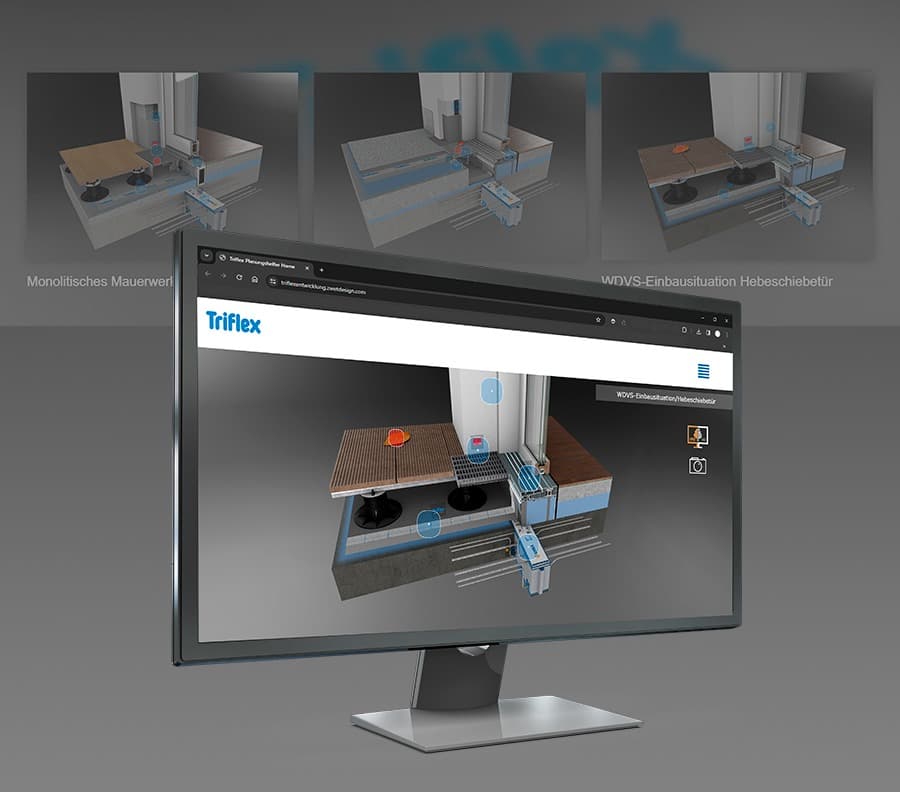
Floor-level, barrier-free window connections represent a special case in terms of waterproofing. We have developed ift-certified interface solutions for this purpose.
Together with the manufacturers Schöck, ACO, Siegenia, Solarlux, and Profine, we’ve joined forces to make the design and implementation of barrier-free transitions on balconies and patios as simple as possible.
With our handy planning tool, you can view the structure of the solutions and their individual components with just a few clicks. Discover our digital planning assistant!
Technical Support from Triflex Project Managers
Especially with complex projects, attention to detail is key to the project’s success.
Triflex project managers provide project-specific support—from planning through implementation.
Scope of Services:
- Technical consulting directly on-site
- Support with the bidding process and detailed planning
- Clarification of regulatory requirements (DIN 18531 / DIN 18533)
- Minimization of execution and liability risks
Result:
Confident planning decisions and fewer errors on the construction site.

Adhesion and Material Compatibility: Secure on All Surfaces
A key risk in practice is the combination of materials.
Triflex has therefore conducted extensive testing:
- tested over 11 typical substrates
- Focus on adhesion and long-term performance
- Tested combinations for reliable system configurations
Typical substrates tested:
- Concrete and screed
- Masonry (brick, sand-lime brick)
- Aluminum and PVC
- Wood (natural / coated)
Result:
Planning reliability even in complex installation situations.
Solutions for every installation situation
Whether it’s new construction or renovation—Triflex offers the right system solutions:
- monolithic masonry
- ETICS systems
- Structures with insulation and facade systems
The following are available for each option:
- Detailed drawings
- Tested system configurations
- Clear installation guidelines
Advantage:
Fast, reliable implementation on the construction site.
Window Installations and Zero-Threshold Entrances—The Most Important Questions Explained Simply
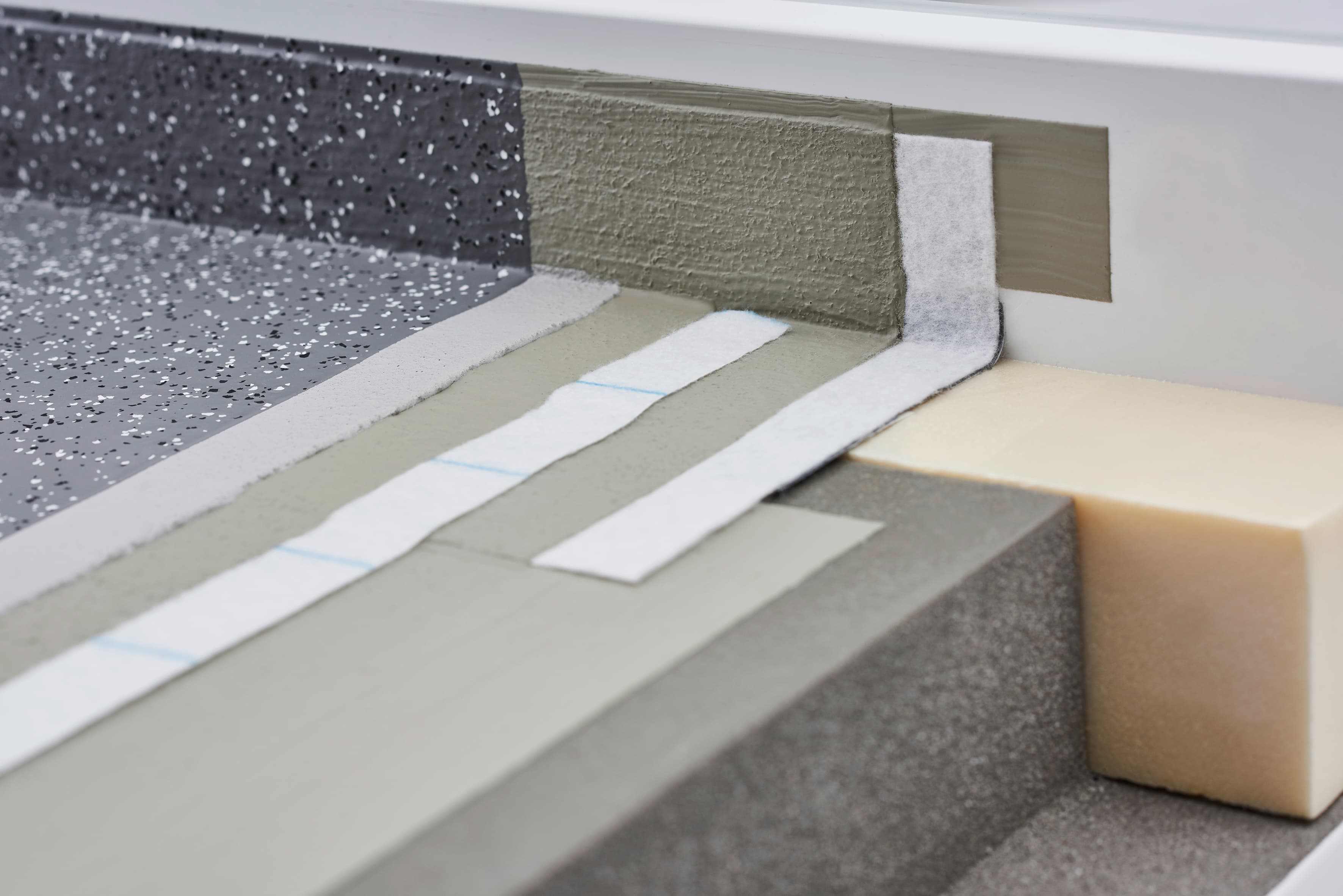
Liquid plastic is particularly well-suited for complex connection details such as zero-thresholds, as it conforms seamlessly to any geometry and does not create any weak points due to joints.
Zero-thresholds combine high water exposure, low installation height, and multiple materials in a confined space. Without a tailored system solution, damage occurs particularly frequently in these areas.
Relevant standards include, in particular:
- DIN 18531 (Roof Waterproofing)
- DIN 18533 (Building Waterproofing)
These standards specify requirements but often do not provide complete, detailed solutions.
By:
- System-verified solutions
- clear specifications
- Tested material combinations
- Documented tests
risks can be significantly minimized.
Common mistakes include:
- lack of coordination between trades
- inappropriate material combinations
- Inadequate detailed design
- unverified waterproofing systems
A permanently watertight threshold requires a systematically coordinated waterproofing concept that takes all relevant components into account—from the threshold to the window frame to the adjacent floor structure.
The key factors are:
- seamless sealing systems that do not require joints
- tested detail connections that meet the requirements of DIN 18531 and DIN 18533
- reliable adhesion to all relevant substrates
- consideration of water flow and drainage
- clear interfaces between trades
PMMA-based systems enable full-surface, crack-bridging waterproofing that precisely conforms to complex geometries and remains watertight over the long term.
Result:
Predictable, code-compliant, and permanently functional building envelope connections—even with challenging zero-threshold designs.